
Stories of Hope
To better understand the impact of bone marrow failure, we present stories told by the patients, parents, family members, and spouses who are living with these illnesses. Our entire community benefits from the insightful stories patients and family members share with us about their personal journeys.
Horse ATG Saves Young Equestrian

Aplastic anemia is known to most often strike children between ages 6 and 16, and as fate would have it, Liviya’s troubles became evident right on her sixth birthday. Clearly, this had started earlier but we didn’t know about it. The doctors didn’t know what was wrong with her. One possibility was leukemia, but she was later correctly diagnosed with severe aplastic anemia and had the blood counts to support that classification. Liviya immediately began receiving blood and platelet transfusions, of course. We learned that Liviya’s older brother Axel was not a match for bone marrow
My Son's Aplastic Anemia
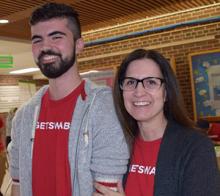
My son Jamie was a very sick child. He was in full-time daycare at the age of 12 months, so he caught every cold and infection imaginable. He’d be on one antibiotic and then need another due to a secondary infection. He had mono, severe flus and ear, throat and other infections. When he was 10, we thought he had heart problems because he became winded very easily. We took him to the doctor who referred us to a cardiologist. Jamie was diagnosed as anemic and put on iron pills. He seemed to recover but was never able to overexert himself. He continued to get sick constantly and was often on
I’m working through aplastic anemia – my son helps me keep focused.
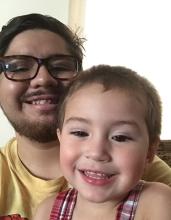
My aplastic anemia diagnosis was delivered on September 15, 2015 when I was 20. I was always quite active but was finding that I was fatigued, sleeping a lot, and then my gums started bleeding. I hoped this would stop, but that didn’t happen. Finally, when I was attending a local football game, one side of my body went numb. I went to North Central Baptist hospital, and when the blood work results came in the doctor said ‘I am amazed that you were able to even walk in here.’ All of my blood counts were extremely low. So I was admitted and received transfusions. More tests followed,…
Shares her 11-year-old daughter's story
Brianna had always been a healthy young girl. We initially noticed some rather minor things with her but did not know at first how serious they were. She had low-grade fevers that went away during the day, but came back in the evening morning and there was her first-ever nosebleed. She missed school for a few days, so we saw her doctor. There is also a clotting disorder that run in our family – so I also wanted her to be checked for this because she had reached age where this should happen. So the usual blood tests were run and through that the problem was discovered. The next day the…
San Diego Family Takes Action for Awareness
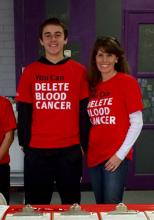
My husband David’s journey with MDS began in April 2014, when it was discovered almost by chance while we were on vacation. David was bitten by a brown recluse spider and had a very severe reaction to it. He had to be hospitalized, which is when he got his first blood test in years. The doctor noted that his blood counts were low and, while he didn’t rule out that the spider bite might have affected the counts, there was a possibility of myelodysplasia. It was a ten-day hospitalization, during which he was also under the care of a rheumatologist because his joints were severely affected by…
Fighting PNH While Helping PNH Patients

I’m 31-years-old, and I was diagnosed with PNH in 2009 when I was 24. I am generally athletic, and in college I was a wrestler. I knew what I could expect when training, competing, and recovering from competition. I transitioned from wresting to mixed martial arts (MMA) in 2008. Naturally, when I started that, I wanted to be sure that my training and recovery were the best they could be. I was 9-0 as a Professional in MMA and had my tenth fight in July 2009. About halfway through training for this fight, I started feeling really sluggish and tired. My body wasn’t recovering in the usual way…
Saved by Her Twin Sister
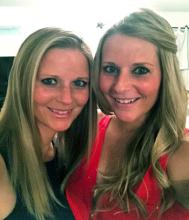
I was your typical 14 year old teenager who always enjoyed spending time with friends and playing sports. On and off for about two years, my parents would take me to see different doctors to figure out why I had aches and pains, stomach issues and fatigue. When I tried out for the middle school volleyball team, I remember that every time the ball bounced off my arms it would leave a terrible bruise. I wore arm pads in hopes it would help, but unfortunately it didn’t, so I had to stop playing. It was when I went to a podiatrist for foot pain that I learned what was about to come. The doctor…
A patient and her parents find that giving back is its own reward

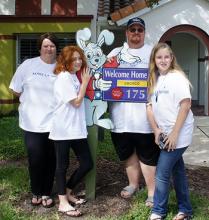
In March 2011, our daughter Katie had just turned 5 and we noticed small bruises all over her body. We wondered if they were happening at preschool. We went in for a visit with her doctor and we expressed our concerns. Blood work showed very low counts and we immediately went to the emergency room at Arnold Palmer Hospital for Children in Orlando. Katie went through many tests and a bone marrow biopsy, and was diagnosed with severe aplastic anemia. Katie moved to treatment within one week of diagnosis and received the standard regimen of horse ATG, augmented with prednisone and cyclosporine…
Moving Past Aplastic Anemia
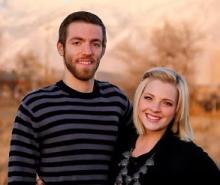
Diagnosed with aplastic anemia in 2012, Bryce Harding is back on track with life. In 2012, Bryce was working in a silver refinery. Friends had been telling him for months that he didn’t look well, but he resisted making an appointment with the doctor. After nearly passing out at work one strenuous day, he finally agreed that it was time for a checkup. Two days after that appointment, he got an urgent phone call from the doctor’s office. The message was stark -- get to the nearest hospital as quickly as possible. That hospital visit, where he was given four units of blood, was the first of…
Biology Teacher Battles PNH
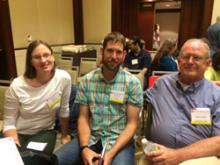
Steve Coffin considers himself lucky. Diagnosed with PNH in 2015, he is grateful that he has responded well to eculizumab (Soliris®) treatment. “I’m incredibly fortunate,” he said. “It’s doing exactly what it’s supposed to do.” Steve, a 34-year-old avid runner, always lived an active lifestyle, but he had also sometimes experienced unexplained issues with fatigue over the years. In February, after a bout with the flu, he woke up at four in the morning with severe abdominal pains. “Within three or four breaths, I knew I had to get to the hospital,” he states. The hospital ran test after test…