Stories of Hope
To better understand the impact of bone marrow failure, we present stories told by the patients, parents, family members, and spouses who are living with these illnesses. Our entire community benefits from the insightful stories patients and family members share with us about their personal journeys.
Eric Hodies – A Study in Attitude and Self-Advocacy
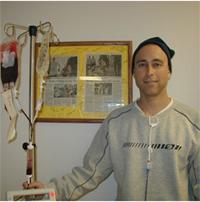
The Diagnosis In 2002, 41-year-old Eric Hodies was a devoted triathlete, training for his 21 st Virginia Beach Sandman Triathlon. He had competed in the event every year since its inception, and he was looking forward to another great race. But in the months leading up to the event, he noticed that he was getting slower and slower, despite the fact that he was increasing the intensity of his workouts. Ever attune to the signals his body was sending him, he went to a doctor. He was initially diagnosed with asthma, but further tests revealed that it was aplastic anemia. “My workouts saved my
Mother Tells How Son’s Aplastic Anemia Impacted Entire Family
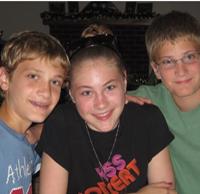
A horrifying diagnosis Barbara Manley found herself living every parent’s nightmare the night her two-year-old son, David, was admitted to the hospital for increasingly serious bruising. “The doctor said it’s either aplastic anemia or leukemia, and you’d better pray for leukemia. I knew leukemia was bad, so that was horrifying.” By the time of his diagnosis of aplastic anemia in January, 2002, David was dangerously close to spontaneous hemorrhaging. A blood transfusion provided some temporary respite while the family decided what to do. Faced with an illness she had never heard of before
Mary Miller: Beyond Watch and Wait - A Mind, Body, Spirit Approach to Living with MDS

In 2005 at age 70, Mary Miller of Doylestown, Pennsylvania was diagnosed with MDS. Now 77, she says of her diagnosis, “My initial reaction was that I had never heard of it, so I looked it up online and scared myself half to death!” Like many MDS patients, the first indication there may be a problem came from experiencing significant fatigue. “I was tired and cold all the time, and my hair began falling out. At first, my primary care physician thought the problem was low thyroid and prescribed medication. However, additional blood work showed an anemia that could not be treated with B-12 or
Kyle Malmstrom – Saved by Identical Twin, Young Aplastic Anemia Survivor Literally Brings Comfort to Others
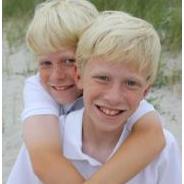
Written by Kimberly Malmstrom Our son, Kyle, was a normal active 11-year-old who enjoyed climbing trees, swimming, and running. He loved to run around and play with his friends. The first week of school last fall was normal for Kyle. He was excited to see friends and meet his new sixth grade teachers. However, throughout that week, he developed large bruises. Some had known causes - others did not. Kyle then noticed purple dots (petechiae) on his legs. By Saturday of Labor Day weekend he was covered with the dots. Our pediatrician said we should take him directly to the emergency room at…
Luke Gane, Aplastic Anemia Survivor and UCLA Bruin
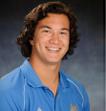
At the time, Luke Gane considered himself a typical sophomore. It was July 2008, and Luke was getting ready for the all-important junior year of high school football season. He had his wisdom teeth removed and afterwards, found himself spitting up blood. It was chalked up to a side-effect of the surgery. Little did Luke know, his health was in jeopardy. In the days ahead, Luke became fatigued; shortly thereafter, a 2-hour nose bleed turned into a trip to the emergency room. After a series of blood work and a bone marrow biopsy, Gane was diagnosed with aplastic anemia. Aplastic anemia is a…
Norma Good’s Life as an MDS Survivor: From Diagnosis to Remission
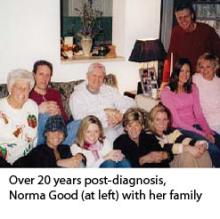
A grim prognosis In 1989, all three of Norma Good’s blood counts were found to be abnormally low. The hematologist in her home town admitted to not knowing how to handle her rare bone marrow failure condition, so he referred to her to a local clinic which didn’t offer much hope for survival. Not easily deterred, Norma sought out a clinical trial at the National Institutes of Health (NIH) in Bethesda, Maryland. “The NIH is wonderful,” she says. “They’re doing their best to combat these diseases, and they’re making improvements all the time. We need to encourage people to realize how much…
Feeling at home in the muddy water
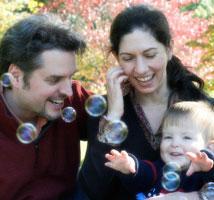
"May we live like the lotus, at home in the muddy water.” Judith H. Lasater, PhD In 2003, I had no idea who Judith Lasater was, and I was not at all at home in the “muddy water.” I was a 5th grade teacher, I was hoping to start a family with my husband, and I had plans that in no way involved having a bone marrow failure disease. And yet, in September that year, a series of doctor appointments led me to Georgetown University Hospital in Washington, DC and to the National Institutes of Health (NIH) in Bethesda, MD where I had bone marrow biopsies that confirmed a diagnosis of severe aplastic…
Fighting PNH with Perseverance and Spirit
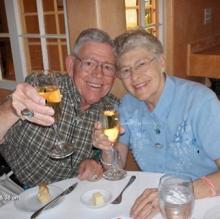
Bunny Williams was diagnosed with paroxysmal nocturnal hemoglobinuria (PNH) in the spring of 2000. Her symptoms were fatigue, stomach cramps, difficulty swallowing and jaundice. At the Phoenix Regional Patient and Family conference in March 2011, Bunny shared her story with other patients and families at the Celebration of Hope ceremony. In Bunny’s Own Words I would spend a good portion of the day on the sofa. My husband got the meals, washed dishes, did the laundry and cleaned the house. I felt so guilty that I wasn't able to do the things that I had always done. My hematologist and I…
Builds supportive community to help him with MDS and bone marrow transplant
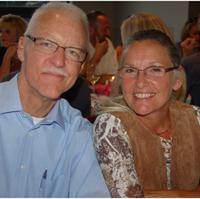
When Duane Draper was diagnosed with MDS in July, 2009, the 57-year-old father of two grown children was asymptomatic and didn’t even realize that there was a problem with his health. Though he had been feeling slightly more fatigued, he attributed it to aging and didn’t worry about it. However, during a physical, his physician did some routine blood work and discovered that all three of his blood counts were low. “Initially, I was really surprised to learn that my blood counts were low,” says Draper. “I’ve always been really healthy, with no major health issues that people get, like high
Mary Upton, Aplastic Anemia Survivor, Springfield Virginia
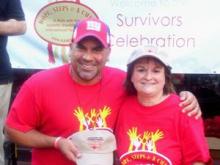
After a couple of weeks of constant nose bleeds and mouth ulcers, three doctor visits and a bone marrow biopsy that showed hardly any cells, I was finally diagnosed with Sudden Severe Aplastic Anemia in November 1997 at the age of 45. NIH would not accept me as a patient and it was through the perseverance of Dr. Robert Brodsky, that Johns Hopkins accepted me, knowing that I was a full-time student with a maximum on my insurance policy that wouldn’t begin to cover all my medical expenses. I was given a choice of the usual treatment, ATG/Cyclosporin or a new protocol, High Dose Cytoxan