After a couple of weeks of constant nose bleeds and mouth ulcers, three doctor visits and a bone marrow biopsy bone marrow biopsy: A medical procedure to remove a small piece of solid bone marrow using a needle that goes into the marrow of the hip bone. The solid bone marrow is examined for cell abnormalities, the number of different cells and checked for scarring of the bone marrow. that showed hardly any cells, I was finally diagnosed with Sudden Severe Aplastic Anemia Aplastic Anemia: (ay-PLASS-tik uh-NEE_mee-uh) A rare and serious condition in which the bone marrow fails to make enough blood cells - red blood cells, white blood cells, and platelets. The term aplastic is a Greek word meaning not to form. Anemia is a condition that happens when red blood cell count is low. Most… in November 1997 at the age of 45. NIH would not accept me as a patient and it was through the perseverance of Dr. Robert Brodsky, that Johns Hopkins accepted me, knowing that I was a full-time student with a maximum on my insurance policy that wouldn’t begin to cover all my medical expenses.
I was given a choice of the usual treatment, ATG/Cyclosporin or a new protocol protocol: An action plan that describes what will be done in a clinical trial and how it will be carried out. This plan is reviewed and approved by a committee at each place doing the clinical trial. This committee is known as the Institutional Review Board. , High Dose Cytoxan chemotherapy chemotherapy: (kee-moe-THER-uh-pee) The use of medicines that kill cells (cytotoxic agents). People with high-risk or intermediate-2 risk myelodysplastic syndrome (MDS) may be given chemotherapy to kill bone marrow cells that have an abnormal size, shape, or look. Chemotherapy hurts healthy cells along with… . I was told that the standard treatment could cause relapse down the line and the formation of pre-leukemic or leukemic cells. However, the new treatment had only been given to 10 people and 4 of those did not survive. After a couple of days of just lying there, dealing with everything that was going on around me, and the knowledge that my only sibling was not a donor match for a bone marrow transplant bone marrow transplant: A bone marrow transplant (BMT) is also called a stem cell transplant (SCT) or hematopoietic stem cell transplant (HSCT).The procedure replaces unhealthy blood-forming stem cells with healthy ones and offers some patients the possibility of a cure. But for many patients, a BMT is not an option due… , I decided to take a risk and go with the chemotherapy treatment.
I received the chemo for 4 days, after which I lost my hair (pretty scary looking at myself in the mirror), and I needed anti-fungal and antibiotic antibiotic: (an-tee-by-AH-tik) A medicine that fights bacterial infections. When a person with bone marrow failure does not have enough neutrophils, the white blood cells that fight infection, antibiotics may help to prevent and fight infection. drugs along with an endless barrage of blood transfusions blood transfusions: A blood transfusion is a safe and common procedure. Most people who have a bone marrow failure disease like aplastic anemia, MDS or PNH will receive at least one blood transfusion. When you receive a blood transfusion, parts of blood from a donor are put into your bloodstream. This can help some… just to keep me going. The chemo’s job was to wipe out my bone marrow bone marrow: The soft, spongy tissue inside most bones. Blood cells are formed in the bone marrow. and then I received a growth factor growth factor: A substance made by the body that stimulates the bone marrow to produce blood cells. Some growth factors are man-made in the laboratory and used for treating low blood counts. These include red blood cell growth factors called erythropoietin (EPO) and darbepoetin, and white blood cell growth… to stimulate the marrow to produce healthy blood cells. I was in Johns Hopkins for almost 3 months preceded by a week in a local hospital. I finally had enough white cells to venture out into the world.
Once home, I needed to make daily visits to a hospital (including weekends) for red cell and platelet platelet: The smallest type of blood cell. Platelets help the blood to clot and stop bleeding. Also called a thrombocyte. transfusions, neupogen for my white cells, and blood tests. Little by little, my counts were coming up, and I was transfusion independent within 2 years. But I had developed iron overload iron overload: A condition that occurs when too much iron accumulates in the body. Bone marrow failure disease patients who need regular red blood cell transfusions are at risk for iron overload. Organ damage can occur if iron overload is not treated. (where too much iron in the blood can be absorbed by the organs and damage the liver). So I needed shots to decrease the iron and ironically had to have regular therapeutic phlebotomies (giving blood) to decrease the iron.
PHEW! After all that, the only real issue I face now is that I developed high blood sugar in the hospital after a couple of weeks. I’m not sure if it was the disease, the treatment or the large number of blood transfusions I received, but my blood sugar was always normal before I was hit with this disease.
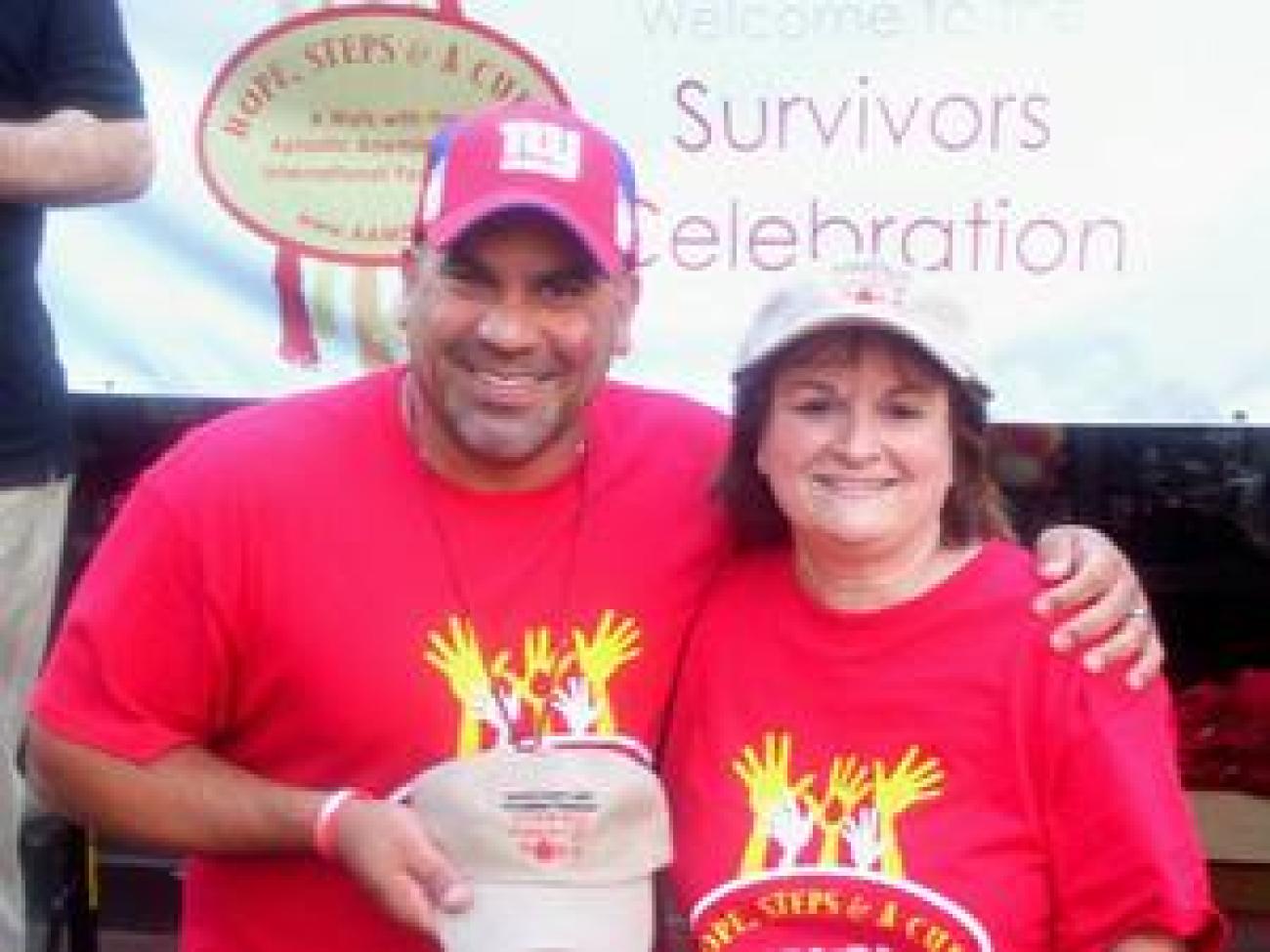
Other than that, I’m in pretty good health and participated in the 3-mile Hope, Steps and A Cure Walk for AA&MDSIF in Bethesda, MD in July 2010, and had one of the top fundraising teams for the event. I am eternally grateful for all the prayers, visits, mail, calls and support I received that helped me get through this. I had recently been divorced when I was diagnosed, and to me, fighting this disease was easier than everything I went through with my divorce because of the support I received. If there is an annual Hope, Steps & A Cure Walk in this area for AA&MDSIF I plan to be there and keep raising more money every year!
Update: Mary is now a 25-year survivor, still working full-time, enjoying life, and her grandchildren!