
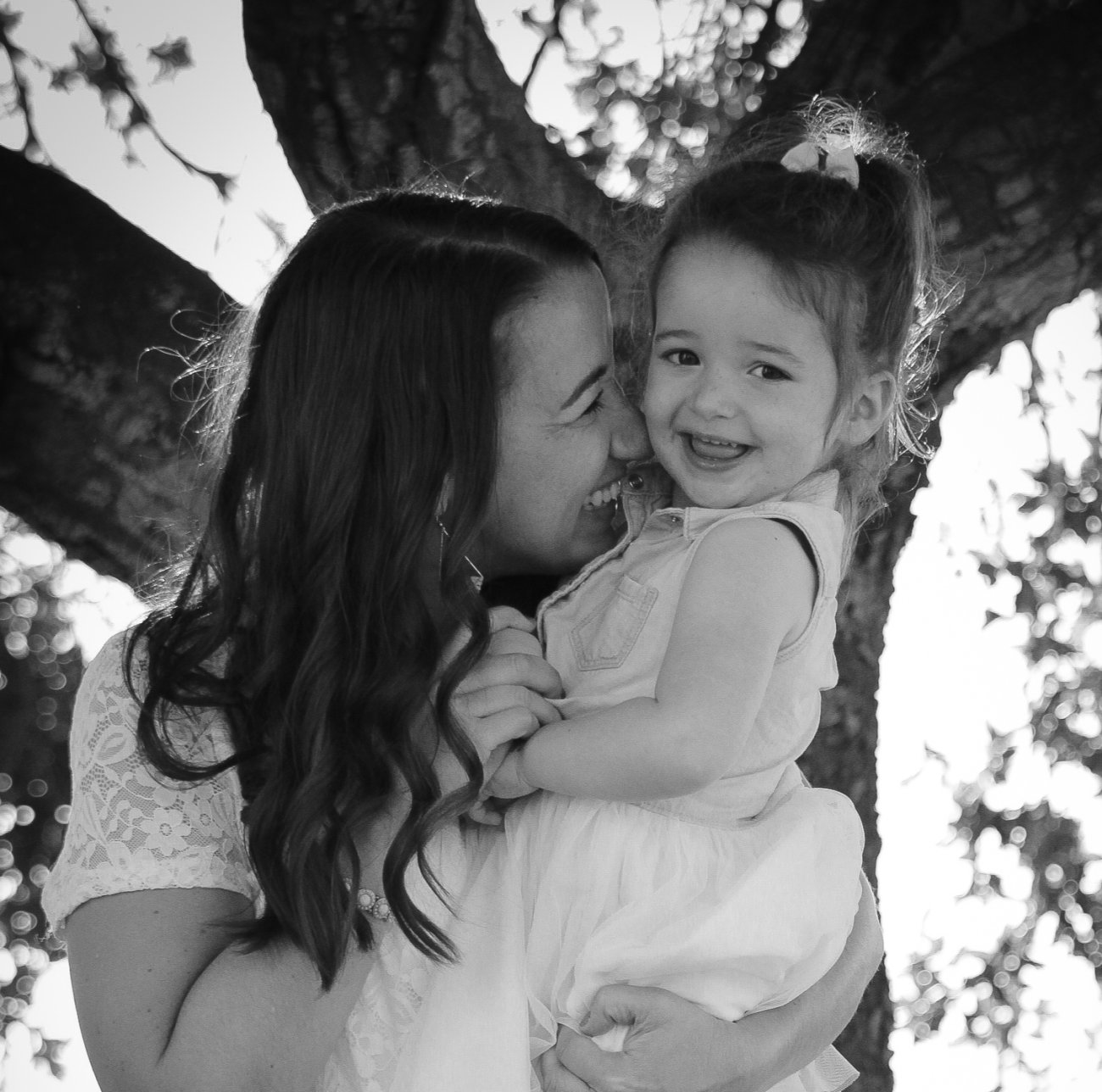
Christy was a nurse in pediatrics for over 12 years. She was training to have a key role in the neonatal unit. But her plans were interrupted in May, 2026.
Christy and her physician husband were enjoying life with their two young children after a recent relocation. One day in early May, her husband noticed unusual bruising on her legs. She was fatigued, but brushed it off as a byproduct of the 12-hour shifts she served in training at the hospital.
Because her husband was a hospitalist, he ordered a complete blood count (CBC) complete blood count (CBC): A group of tests performed on a small amount of blood. The CBC measures the number of each blood cell type, the size of the red blood cells, the total amount of hemoglobin, and the fraction of the blood made up of red blood cells. Also called a CBC. . The results: all three cell lines were down – red blood cells, white blood cells, and platelets. The bone marrow biopsy bone marrow biopsy: A medical procedure to remove a small piece of solid bone marrow using a needle that goes into the marrow of the hip bone. The solid bone marrow is examined for cell abnormalities, the number of different cells and checked for scarring of the bone marrow. followed, along with testing for West Nile Virus, common in her area. The biopsy didn’t have enough of the right material to diagnose leukemia, which was suspected, or any other condition.
To get more data, she had a second bone marrow biopsy. This time, the indications were clear; she had Severe Aplastic Anemia Aplastic Anemia: (ay-PLASS-tik uh-NEE_mee-uh) A rare and serious condition in which the bone marrow fails to make enough blood cells - red blood cells, white blood cells, and platelets. The term aplastic is a Greek word meaning not to form. Anemia is a condition that happens when red blood cell count is low. Most… .
By now, less than a week later, Christy realized she could not work at her rigorous nursing job for now. Her bosses promised that she would be able to return. For her health care, she was referred quickly to the transplant team.
While she waited for transplant, her health declined. She had high heart rates and dizziness. She had multiple transfusions of both whole blood and platelets. Although her siblings were tested to find out if they could be the match for her, each was only a half-match. Fortunately, two matches were found, in Poland and in Germany. Christy is hoping for the transplant to occur in late August.
In the meantime, she and her family are working on the mechanics of the transplant. Her husband will be able to use FMLA. Fortunately, her parents had already bought a house in her town and will be settled before the transplant so they can help with child care.
Christy’s instinct was to document her journey to help other patients. She posted regular updates on Instagram, including adverse events like a reaction to transfusion and the mitigation responses. She joined a virtual support group to learn from others and to share her experiences.
As she approaches the transplant, she pays attention to the needs of her children, ages 5 and 8. The younger child knows that “mommy’s blood is sick” and is worried about getting a needle for the transplant itself. The older child is fixated about the upcoming loss of hair, demanding that she wear a wig when she comes to his school. (She found out her insurance covers a wig.)
Christy is trying to have a good attitude as she deals lives with the debilitating effects of Aplastic Anemia and approaches transplant. She’s having her hair cut shorter in preparation for losing her hair. She knows she needs to avoid a “woe is me” attitude as much as she can.
What advice does she have for patients who were recently diagnosed with Aplastic Anemia? “Maintaining what helps your mental health is as important as transfusions,” she says. Since she isn’t able to participate in the group fitness classes as she used to, she walks outside, enjoying the sunshine, as much as she can. “Don’t let the diagnosis consume you,” she advises, although she admits that’s easier said than done.
The doctors have told her that the first 100 days will “suck.” Although that’s alarming, she says it’s better to know what to expect, than to be hit with the challenges of transplant without knowing this is part of the process.
Christy will follow up with Part 2 of her story after transplant, so watch this space for the update later this year.