
Paroxysmal Nocturnal Hemoglobinuria (PNH)
Pegcetacoplan versus Eculizumab in Paroxysmal Nocturnal Hemoglobinuria
Background: Paroxysmal nocturnal hemoglobinuria Paroxysmal nocturnal hemo
Danicopan (ACH-4471)
Danicopan (ACH-4471)
Danicopan (ACH-4471):
Danicopan (ACH-4471) inhibits alternative pathway of complement (APC) activity, and has potential to block the alterna
Frequency and perturbations of various peripheral blood cell populations before and after eculizumab treatment in paroxysmal nocturnal hemoglobinuria
While red blood cells (RBCs) and granulocytes have been more studied, platelets and reticulocytes are not commonly used in paroxysmal nocturnal hemoglobinuria
Jorge Leguizamo, MD
Institution
Georgia Cancer Specialists
Physician Status
accepting new patients
Primary Disease Area of Focus
Paroxysmal Nocturnal Hemoglobinuria (PNH)
About
Dr. Leguizamo is a member of the American Society of Hematology, the Georgia Society of Clinical Oncology, the American Society of Clinical Oncology, and the International PNH interest group. He is also a Fellow of the American College of Physicians. Dr. Leguizamo speaks Spanish fluently.
How I Treat Paroxysmal nocturnal hemoglobinuria
Paroxysmal nocturnal hemoglobinuria Paroxysmal nocturnal hemoglobinuria: (pa
Sandrine Niyongere, MD
Institution
University of Maryland Greenebaum Comprehensive Cancer Center
Physician Status
accepting new patients
Primary Disease Area of Focus
Acute Myeloid Leukemia (AML)
Aplastic Anemia
Chronic Lymphocytic Leukemia (CLL)
Chronic Myelomonocytic Leukaemia (CMML)
Graft Versus Host Disease (GVHD)
Myelodysplastic Syndromes (MDS)
Myeloproliferative Neoplasms (MPN)
Paroxysmal Nocturnal Hemoglobinuria (PNH)
Pure Red Cell Aplasia (PRCA)
About
Dr. Niyongere joined the School of Medicine and Marlene and Stewart Greenebaum Comprehensive Cancer Center as an Assistant Professor in 2018. Her clinical focus is in acute leukemias, myelodysplastic syndromes, myeloproliferative neoplasms and bone marrow failure syndromes. Dr. Niyongere’s primary research interests are in finding new therapeutic targets by understanding oncogenic signaling pathways involved in AML and MDS as well as studying the role of the tumor microenvironment in the development of chemoresistance in leukemia. Dr. Niyongere also serves as an attending physician on the
James Cook, MD, PhD
Institution
Cleveland Clinic, Learner School of Medicine
Physician Status
accepting new patients
Primary Disease Area of Focus
Acute Myeloid Leukemia (AML)
Aplastic Anemia
Chronic Lymphocytic Leukemia (CLL)
Chronic Myelomonocytic Leukaemia (CMML)
Graft Versus Host Disease (GVHD)
Myelodysplastic Syndromes (MDS)
Myeloproliferative Neoplasms (MPN)
Paroxysmal Nocturnal Hemoglobinuria (PNH)
Pure Red Cell Aplasia (PRCA)
Pediatric
About
James R. Cook, M.D., Ph.D., is a Professor of Pathology at the Cleveland Clinic Lerner College of Medicine. He serves as Section Head of Hematopathology in the Department of Laboratory Medicine. Dr. Cook's clinical interests focus on diagnostic hematopathology and molecular diagnostics. His research interests include diagnostic and prognostic markers in non-Hodgkin lymphoma and plasma cell disorders, and molecular diagnosis of leukemia and lymphoma. He participates in numerous multi-institutional research efforts including the Lymphoma and Leukemia Molecular Profiling Project (LLMPP) and the
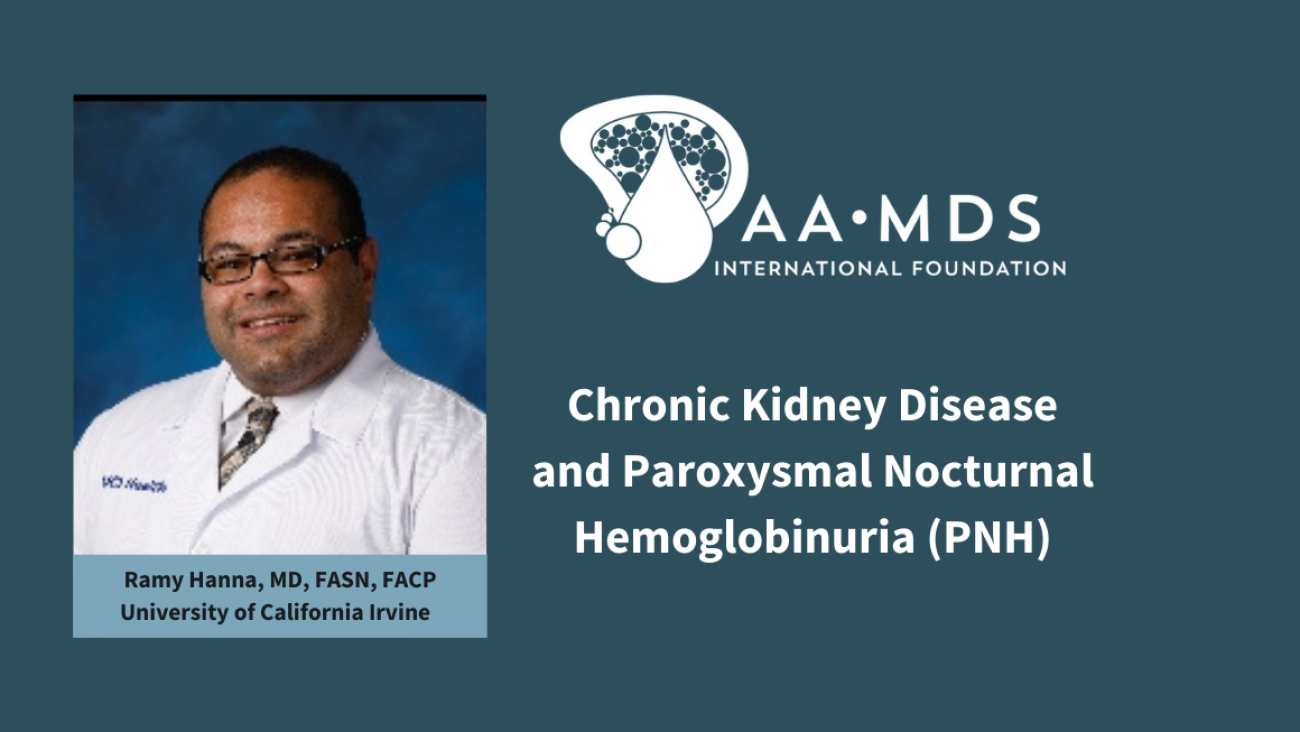
Chronic Kidney Disease and PNH

Topic(s)
Paroxysmal Nocturnal Hemoglobinuria (PNH)
Presenter(s)
Ramy M. Hanna, MD, FASN, FACP
Dr. Ramy Hanna is an Assistant Clinical Professor of Medicine and Nephrology at the University of California Irvine UCI-Health. He is a clinician-educator who works at the intersection of patient education and research, participating in ongoing research into diseases of the…