
When Shauna was diagnosed with MDS, she knew she would have to leave her home in Alaska for treatment. She chose to move to North Carolina where her extended family lived. With access to specialists there, and having a supportive network, this proved to be an excellent plan.
Shauna began the ATG protocol protocol: An action plan that describes what will be done in a clinical trial and how it will be carried out. This plan is reviewed and approved by a committee at each place doing the clinical trial. This committee is known as the Institutional Review Board. in 2016. After completing this treatment, she remained transfusion-dependent. Yet she never gave up. Then, in September, 2017, she began a treatment regimen with Decitabine Decitabine: It works by reducing the amount of methylation in the body. Methylation is a process that acts like a switch to turn off or “silence” genes in certain cells. When these genes (called tumor suppressor genes) are turned off, MDS cells and cancer cells can grow freely. Decitabine is approved by the U… . This regimen lasted for a full year. Then she was prescribed Cyclosporine Cyclosporine: Cyclosporine is used along with antithymocyte globulin (ATG), another immunosuppressant, for treating aplastic anemia and some other forms of bone marrow failure. , but she was still transfusion-dependent in 2019, requiring blood in 8-10 week intervals.
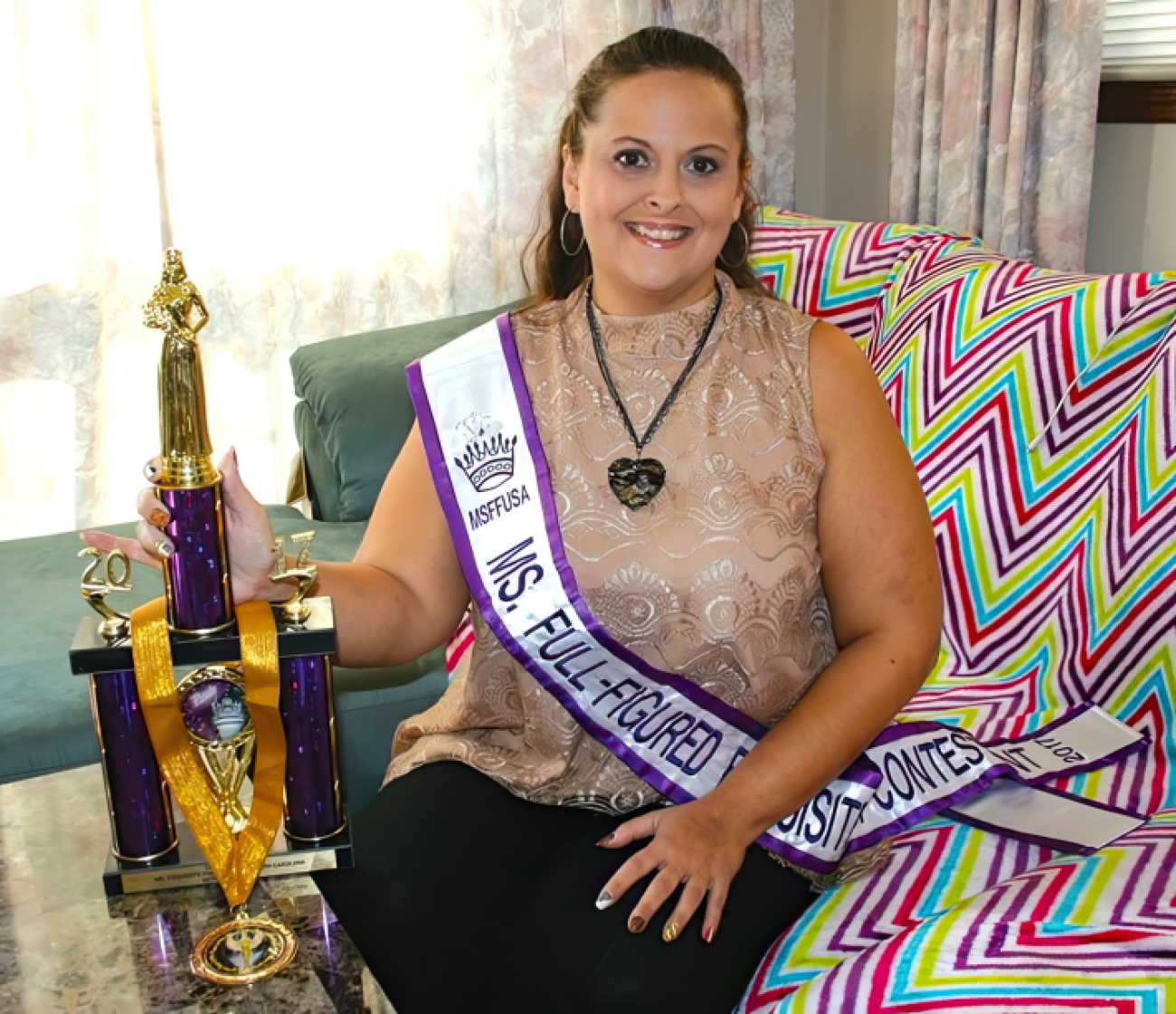
In 2017, Shauna took action to live life to the fullest, no matter how long her life would be. She entered the Ms. Full-Figured North Carolina Pageant, winning 1st runner up Ms. Exquisite Full Figured North Carolina!
The pageant required a regular commitment to volunteering. Not to be underestimated, Shauna signed up with the local Volunteer Fire Department. She studied and earned certification in Fire Fighting, and subsequently earned her EMT certificate as well. Whether fighting fires on the front line, providing emergency care, or assisting with clerical tasks, Shauna became a valued member of this volunteer-only Fire Department.
While waiting for a new drug approval (Reblozyl) she was monitored carefully by her specialist. On the verge of qualifying as Intermediate-Risk MDS, she began eating a healthier diet and simultaneously experienced menopause. She needed fewer transfusions but remained transfusion-dependent.
Then, in 2020, Shauna got sick. She assumed it was Covid (during the height of the pandemic,) but pneumonia caused by a staph blood infection with a pulmonary embolism pulmonary embolism: (PULL-muh-nerr-ee EM-buh-liz-um) A blockage of an artery that carries blood to the lungs. See Embolism. was the cause. Treatment required hospitalization in crisis care. Eight days, two transfusions, and many antibiotics antibiotics: The most common white blood cells are called neutrophils. They fight infection. Patients who don't have enough healthy neutrophils are said to have neutropenia. Because of their low white count, they may get infections easily and have trouble getting rid of infections. If you have neutropenia,… later, she was allowed to come home with IV antibiotics for three more weeks.
After this crisis, Shauna’s blood counts returned to a more normal state. With monthly counts of 10-12, she began seeing her specialist only annually. Although Shauna still had bone pain, treated with painkillers, she suffered less from fatigue. She returned to a more regular, predictable, life.
Shauna’s journey to remission suddenly became essential. Her father had a medical crisis, “he coded,” she said, becoming his caregiver after his 163-day hospitalization. His health improved somewhat between January and October 2024, so her caregiving role shifted to support. She also helped in caring for her grandchildren. She served other roles at the Volunteer Fire Department, becoming a trainer and clerical volunteer.
Shauna was once told her life expectancy was only two years. She told her doctor, “If I’ve only got two years, I’m gonna make it the best two years of my life!” That was in 2015, nearly 10 years ago at the time of this posting.
What should other patients remember after diagnosis? When telling her own story, Shauna embraces living with no regrets. She's proud of herself, wanting to make her family proud. She refined what was important to her. Knowing she is in remission but not cured, she continues to make each day count. She says it’s never too late to turn your life around, but most importantly, “Never lose faith!”