“I would like other families to know that they are incredibly inspiring and strong. You are the foundations for patients with MDS to fight, you are their strength, their heart and their cheerleaders. Even when you're hurting, you show up for them, and you deserve to be recognized for the love you have for your family member that is fighting MDS. Never forget how important you are in this process.”
My early childhood memories of my time with my dad, Randy, are filled with playing in parks, making milkshakes, fishing, and enjoying time together. My older sister and I spent all the holidays and many weekends with my dad, and the rest of the time with our mom. Despite the distance, over an hour and a half apart, my parents did a good job of splitting visitation.
As I turned 14, visits were farther apart. My dad moved farther away, around 7 hours, to be the caregiver for his mother. Despite this, he called every day, multiple times a day and in these phone calls, he mentioned he didn’t feel great, but I figured it was because of the stress of taking care of his mom as she declined. He didn’t seek medical help until after she passed away, partly because her home was in a rural area with little medical care, 3 hours away from the city.
The testing phase for my dad took months. He was sent for one blood test after another, and more. With each test, we all became more worried. I was 15 and my sister was 17, and we had the responsibility of trying to help at a distance while trying to find a diagnosis. One day, our dad was in town and was found on the floor, unconscious, and taken to the local hospital. He received transfusions at this point.
When he was referred to the specialists, they were in the city, nearly three hours away from his home. All he revealed to my sister and me was, “They are thinking leukemia.” When he told me that, I totally brushed it off because I couldn’t fathom that he could ever be diagnosed with cancer. I said, “You won’t have that, it will be something else.”
I scheduled a trip to help my sister with my nephew who needed medical care at the connecting hospital, where my dad was undergoing treatment in the hospital. My dad told me that he’d be in the hospital that day for “testing.” When I arrived, I went over to the building he told me he was in, where I thought he had an appointment. I walked into this building and saw a sign that said chemotherapy chemotherapy: (kee-moe-THER-uh-pee) The use of medicines that kill cells (cytotoxic agents). People with high-risk or intermediate-2 risk myelodysplastic syndrome (MDS) may be given chemotherapy to kill bone marrow cells that have an abnormal size, shape, or look. Chemotherapy hurts healthy cells along with… above the desk, and patients fighting cancer in the waiting room, but I didn’t think much of it just that it was strange. The receptionist then took me back after I gave her the information. I was surprised to find my dad receiving treatment alongside patients with cancer. “Why is he here?” was racing through my mind. I was shocked to discover he was receiving chemotherapy. Tears streamed down my face as I realized my dad had cancer. What I understood could be leukemia I later learned was MDS, another blood cancer. I never imagined it could be fatal.
I noticed my dad was extremely fatigued and short of breath. He was admitted full-time and the doctors finally explained MDS to them. We discussed the care plan, including a
bone marrow transplant
bone marrow transplant:
A bone marrow transplant (BMT) is also called a stem cell transplant (SCT) or hematopoietic stem cell transplant (HSCT).The procedure replaces unhealthy blood-forming stem cells with healthy ones and offers some patients the possibility of a cure. But for many patients, a BMT is not an option due…
.
The treatment plan included blood products, chemotherapy, and ultimately a bone marrow transplant. My dad's biological brother was a perfect 10/10 match, and the donated marrow was ready. Before the transplant, the hospital required a routine skin biopsy.
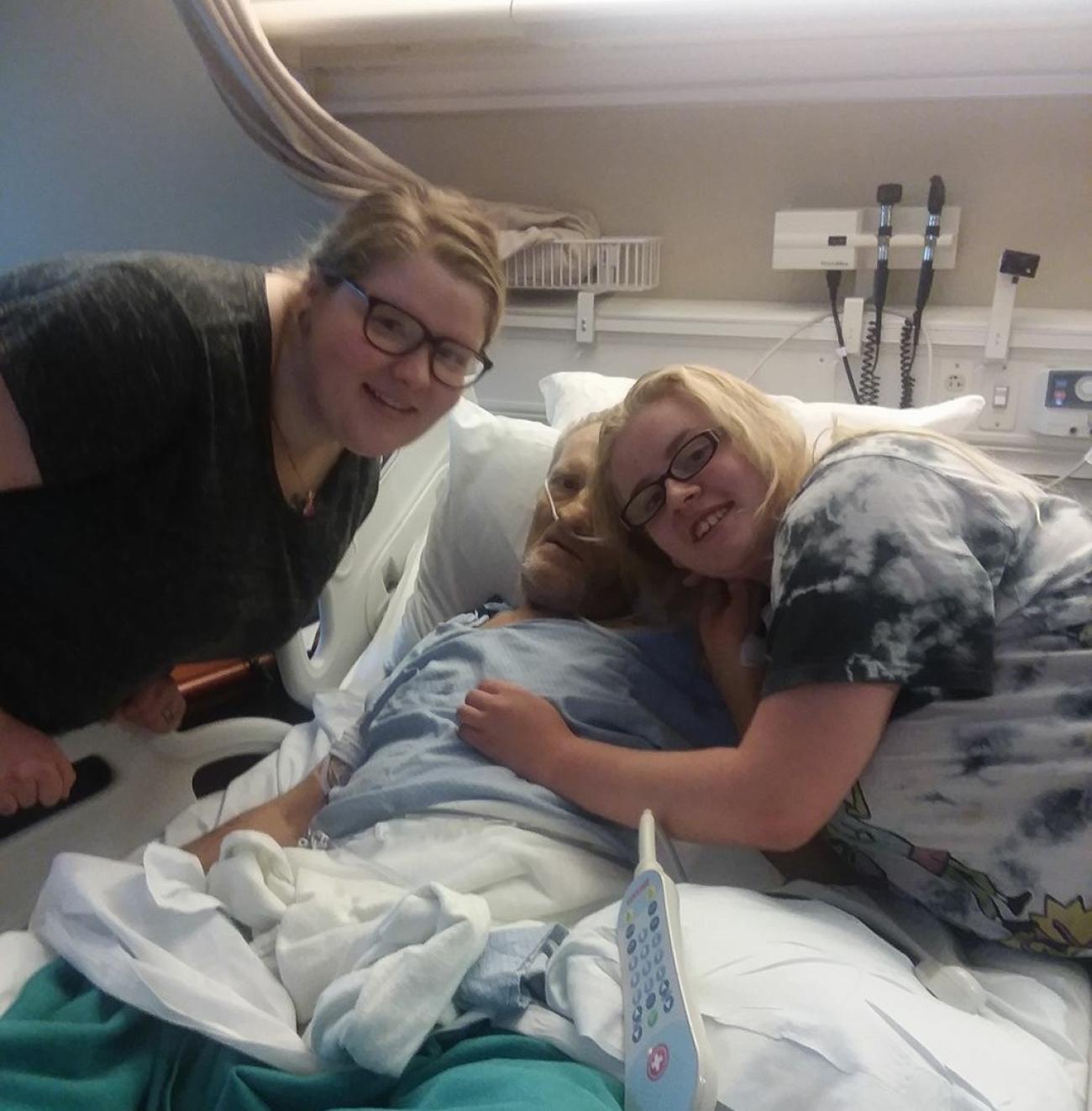
What was expected to be a routine procedure led to an unexpected complication. My dad developed a serious infection that delayed his transplant. Despite every effort to treat it, the infection worsened, and doctors determined that leg amputation offered his best chance of survival. Because of his MDS, the surgery carried significant risks.
The surgery was successful, and for a brief time, we believed we were back on the path toward his transplant. I returned home to school and work while my sister stayed with him.
Just two days later, I was called out of class. My sister was on the phone. "Mom's coming to get you," she said. "He’s not going to make it."
During surgery, my dad suffered additional complications, leaving nothing more for doctors to do but keep him comfortable. My mom and I made the seven-hour drive to the hospital, and in the early hours of the next morning, my father passed away.
In what felt like an instant, our hope for a life-saving transplant became saying goodbye. My entire world felt like it had just ended.
I wanted to share this story because I want teens and young adults to know they aren’t alone, even when their loved one is diagnosed with this rare disease.
When I was asked what I would tell my 15-year-old self, I said, “I would tell my 15-year-old self that it’s okay to be scared and it’s okay to have emotional reactions to something so life changing. You’re allowed to grieve the life you had and the expectations you had with your family during challenging medical procedures and tests.”
I’d also share, “You don’t have to pretend to be strong and showing emotion will bring you closer together rather than isolating you from each other. Seek friendship, connection, and support, don’t isolate yourself. Healing is made through connections.
“You have to remember to take care of yourself during their treatment too because the stress and anxiety of it can make you sick too.”
I want anyone to know who is experiencing grief for a loved one with MDS that I am so sorry for the loss you have endured and the hurt you have had to endure while watching your loved one fight this disease. You aren’t alone in your grief, and you don’t have to grieve alone. Find community, find others who understand. There is beauty in sharing the weight of your grief with others who get it.
These words of wisdom are appropriate for any age of caregiver. No doubt Lilly will use them as she pursues her Master of Science of Clinical Mental Health Counseling, and as she moves forward by helping others.