Graft Versus Host Disease (GVHD)

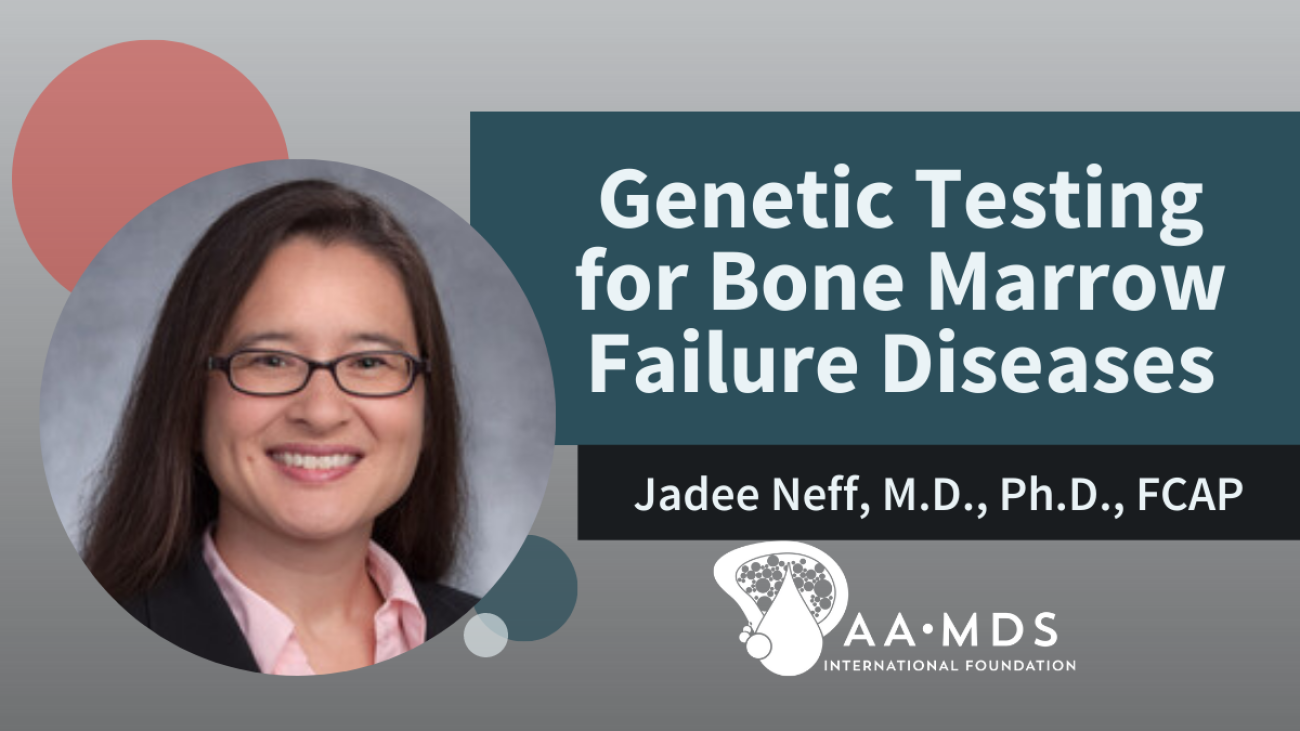
Genetic Testing for Bone Marrow Failure Diseases

Thumbnail for video Watch Now

Topic(s)
Living Well with Bone Marrow Failure
Managing Your Treatment
Presenter(s)
Jadee Neff, M.D., Ph.D., FCAP
In this webinar, Dr. Jadee Neff discusses how genetic testing used in the diagnostic process, how it can help identify possible causes of disease that inform decisions regarding appropriate therapies, identify potential donors for bone marrow transplant, and potential risk for…

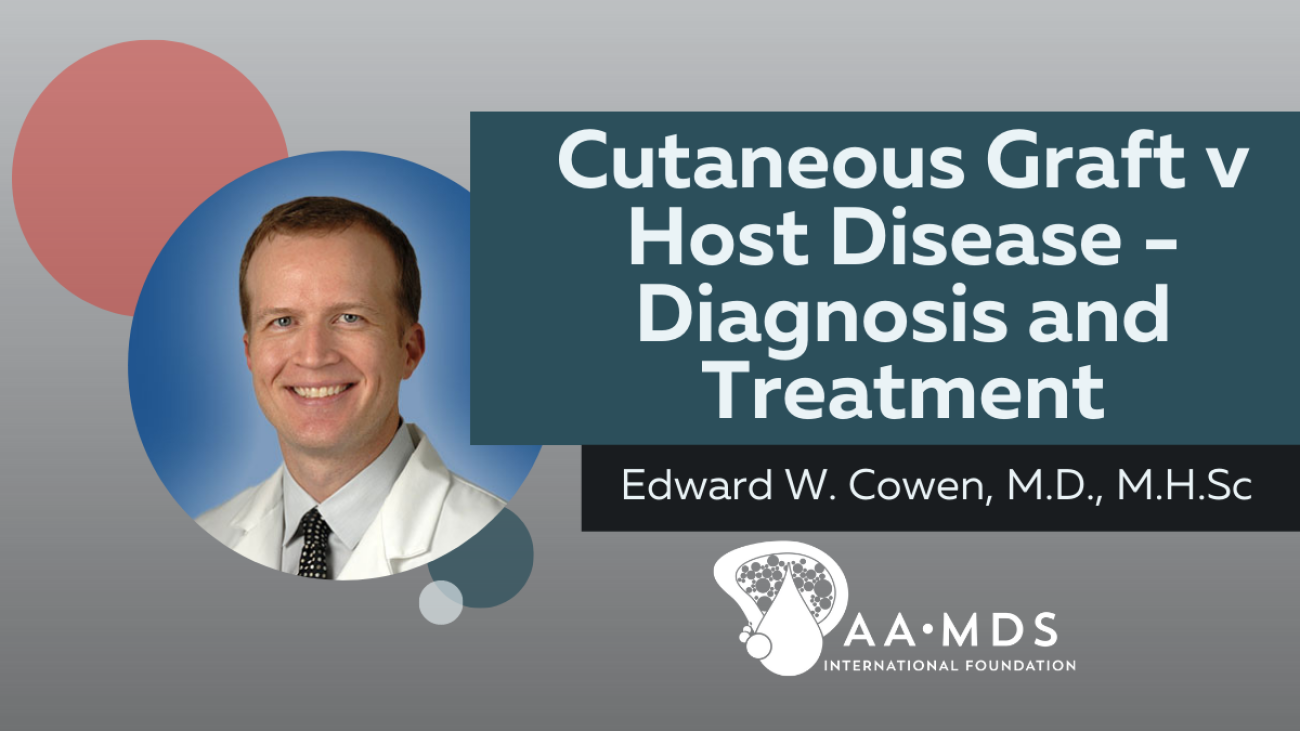
Cutaneous Graft v Host Disease - Diagnosis and Treatment

Thumbnail for video Watch Now

Topic(s)
Bone Marrow Transplant
Living Well with Bone Marrow Failure
Managing Your Treatment
Pediatric Bone Marrow Failure Diseases
Related Bone Marrow Failure Diseases and Malignancies
Presenter(s)
Edward W. Cowen, M.D., M.H.Sc
In this webinar, Dr. Edward Cowen will discuss cutaneous (skin) graft v host disease (GvHD) - a common post-transplant complication. GvHD can affect different layers of the skin as well as the mouth, genitals, hair and sweat glands. Dr. Cowen will discuss diagnosis, the symptoms…

Edward W. Cowen, M.D., M.H.Sc

Institution
National Institute of Arthritis and Musculoskeletal and Skin Diseases at NIH
Physician Status
available for consultation
Primary Disease Area of Focus
Graft Versus Host Disease (GVHD)
About
Edward W. Cowen, M.D., M.H.Sc., leads the NIH Dermatology Consultation Service, conducts independent and collaborative research, and oversees the continuing medication education-accredited Dermatology Grand Rounds, Branch Clinical Fellowship and resident education programs. He is an internationally recognized expert in cutaneous graft-versus-host disease and serves as Director on the American Board of Dermatology as well as on the Editorial Board of JAMA Dermatology. Dr. Cowen’s primary interests include chronic graft-versus-host disease (GVHD), primary immunodeficiency, autoinflammatory skin

Clinical Trials and Children

Until recently, children were rarely included in studies of medical treatments. As a result, much is still unknown about how children respond to drugs, some biologics (such as gene therapy) and medical devices. According to the U.S. Food and Drug Administration (FDA), only 20-30% of approved drugs have actually been labeled for use in children.

mRNA COVID-19 Vaccination Sparks Strong Antibody Response in Patients With AML and MDS

Original Publication Date
Article Source
External Web Content
The mRNA COVID-19 Vaccines Are Safe and Effective for Most Patients with Cancer For most patients with cancer, the mRNA COVID-19 vaccines are safe and effective. This article explains the results of the first study that evaluated the safety and effectiveness of the mRNA vaccines…

Monitoring Amphiregulin May Be Warranted in Caring for Patients with Acute GVHD

Original Publication Date
Article Source
External Web Content
Amphiregulin (AREG) may represent a useful longitudinal monitoring biomarker for patients with life-threatening acute graft-vs-host disease (GVHD), according to a sample of 2 prospective clinical trials that was presented at the 2021 ASH Annual Meeting. Specifically, patients…

FDA Approves First Drug to Prevent Graft Versus Host Disease

Original Publication Date
Article Source
External Web Content
Today, the U.S. Food and Drug Administration approved Orencia (abatacept) for the prophylaxis (prevention) of acute graft versus host disease (aGVHD), a condition that occurs when donor bone marrow or stem cells attack the graft recipient, in combination with certain…

FDA Approves Ruxolitinib in Chronic Graft-Versus-Host Disease

Original Publication Date
Article Source
External Web Content
The FDA has approved ruxolitinib (Jakafi) for the treatment of patients 12 years and older with chronic graft-versus-host disease (GvHD) after failure of 1 or 2 lines of systemic therapy, according to a press release by Incyte. The approval is based on data from the REACH3 trial…

Website Feedback

Please use this feedback form to report website issues only. For other issues concerning patients and families, please email help@aamds.org or use the Patient and Family Helpline here.