patient
Topic(s)
Myelodysplastic Syndromes (MDS)
Presenter(s)
PAUL J. SHAMI, MD
Paul J Shami, MD of Huntsman Cancer Institute describes the types of therapies that may be used in treating MDS, or Myelodysplastic Syndromes that do not include a bone marrow transplant.
PAUL J. SHAMI, MD
Institution
Huntsman Cancer Institute
Physician Status
accepting new patients
Primary Disease Area of Focus
Myelodysplastic Syndromes (MDS)
About
Languages Spoken: English, French, Arabic Dr. Paul Shami is a Professor of Medicine in the Division of Hematology and Hematologic Malignancies at the University of Utah and is a Member and Clinical Investigator at the University’s Huntsman Cancer Institute (HCI). Dr. Shami also holds an Adjunct appointment as a Professor of Pharmaceutics and Pharmaceutical Chemistry at the University of Utah. He is Board Certified in Hematology and Medical Oncology. He started at the University of Utah in 1997. Dr. Shami oversees leukemia clinical trials at Huntsman Cancer Institute. His research also includes
Aplastic Anemia Non-Transplant Therapies - Patient and Family Conference in Salt Lake City, UT 2023
Topic(s)
Aplastic Anemia
Presenter(s)
Srinivas Tantravahi, MBBS, MRCP
Srinivas Tantravahi, MBBS, MRCP (UK) of Huntsman Cancer Institute explains which non-transplant therapies may be considered for treatment of aplastic anemia.
Predisposition to Inherited Bone Marrow Failure Syndromes from Patient & Family Conference UT 2023
Topic(s)
Pediatric Bone Marrow Failure Diseases
Aplastic Anemia
Myelodysplastic Syndromes (MDS)
Presenter(s)
Suneet Agarwal, MD, PhD
Suneet Agarwal, MD, PhD from Boston's Children's Hospital provides essential information for families about inherited bone marrow failure disorders in this session from the Patient and Family Conference in Salt Lake City, UT, 2023
Prajwal Dhakal, MD
Institution
University of Iowa Health Care
Physician Status
accepting new patients
Primary Disease Area of Focus
Acute Myeloid Leukemia (AML)
Myelodysplastic Syndromes (MDS)
Evaluation of the Quality of Life and Treatment Experiences of Patients with Paroxysmal Nocturnal Hemoglobinuria
The purpose of the study is to learn what it is like to have PNH and being treated with for PNH. Individuals who participate in the study will complete an online survey about what it is like to live with PNH. The survey will take about 45 minutes. Participants may also be asked to take part in a one-hour interview by telephone or computer. The interviewer will ask questions about what it is like to have, and be treated for, PNH. No medical treatment of any kind will be given as part of this study.
Hello!
Suneet Agarwal, MD, PhD
Institution
Boston Children's Hospital
Physician Status
accepting new patients
Primary Disease Area of Focus
Aplastic Anemia
Pediatric
2023 AAMDSIF Patient and Family Conference in Dallas, TX
Join patients, families and caregivers for the 2023 Dallas, TX Patient and Family Conference This event is chaired and organized by Dr. Taha Bat from UT Southwestern.
Health-Related Quality of Life and Vulnerability among People with Myelodysplastic Syndromes: A US National Study
Original Publication Date
Article Source
External Web Content
Key Points In MDS, health-related quality of life (HRQoL) was worse for vulnerable participants and those with worse prognosis. Lower-risk MDS was associated with better HRQoL, but this relationship was lost among the vulnerable. Health-related quality of life (HRQoL) and…
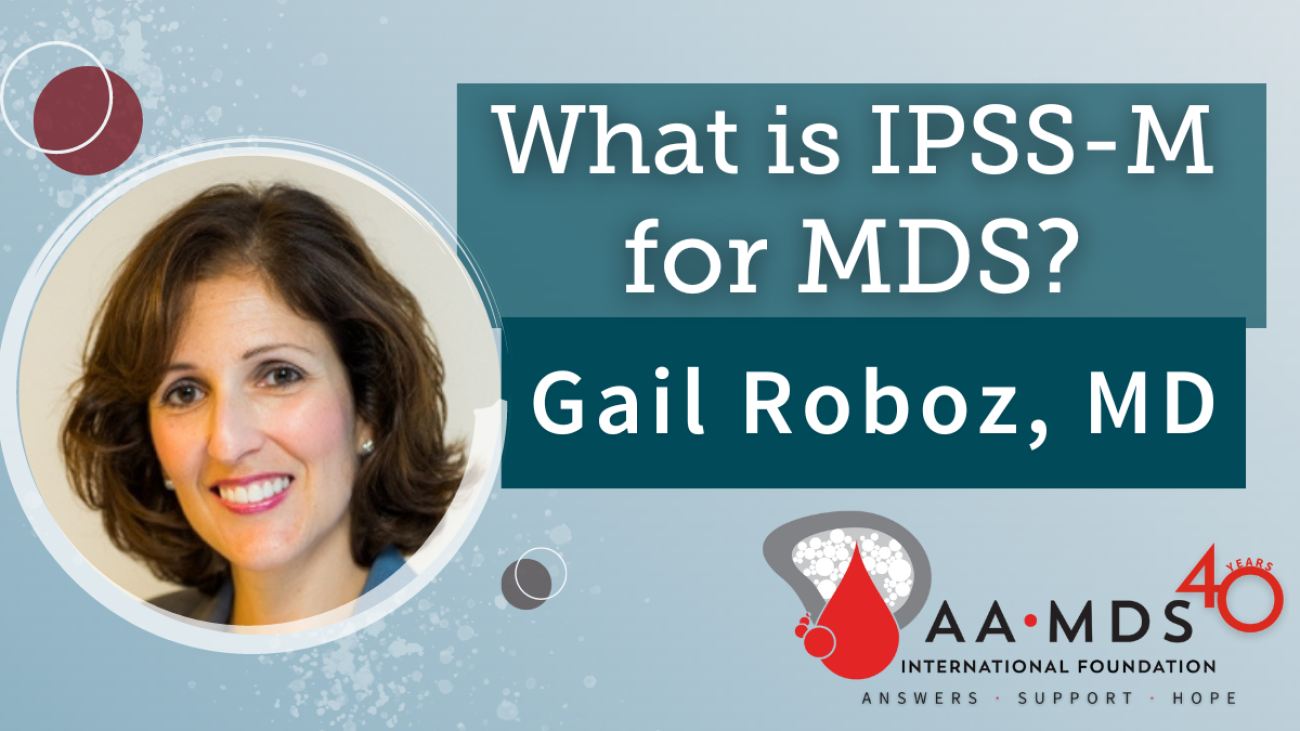
What is the IPSS-M for MDS?
Topic(s)
Myelodysplastic Syndromes (MDS)
Presenter(s)
Gail J. Roboz, M.D.
In this webinar, Dr. Gail Roboz discusses the Molecular International Prognostic Scoring System (IPSS-M) which is a newly developed risk stratification model for myelodysplastic syndromes (MDS) that expands on the original IPSS-R by including data on somatic oncogenic mutations…