patient

Clinical Trial: A type of research study that tests how a drug, medical device, or treatment approach works in people. There are several types of clinical trials. Treatment trials test new treatment options. Diagnostic trials test new ways to diagnose a disease. Screening trials test the best way to detect a disease or health problem. Quality of life (supportive care) trials study ways to improve the comfort of people with chronic illness. Prevention trials look for better ways to prevent disease in people who have never had the disease. Trials are in four phases. Phase I tests a new drug or treatment in a small group to see if it is safe. Phase II expands the study to a larger group of people to find out if it works. Phase III expands the study to an even larger group of people to compare it to the standard treatment for the disease; and Phase IV takes place after the drug or treatment has been licensed and marketed to find out the long-term impact of the new treatment. CureAA: Clinical Trial of Upfront Haploidentical or Unrelated Donor BMT to Restore Normal Hematopoiesis in Aplastic Anemia

Status
Recruiting
Study Date (Range)
-
Bone Marrow Disease(s)
Aplastic Anemia
Age Group
3 years to 75 years
This is a Phase II study of hematopoietic stem cell transplantation for previously untreated patients with severe aplastic anemia. This study is comprised of two cohorts - patients receiving haploidentical donor transplant and patients receiving unrelated donor transplant. The…

Iptacopan Yields Meaningful Hemoglobin Improvements in Pretreated PNH Group

Original Publication Date
Article Source
External Web Content
Data from APPULSE-PNH may support oral iptacopan as a potentially practice-changing option in patients with paroxysmal nocturnal hemoglobinuria. "Results from APPULSE-PNH and previous trials establish oral iptacopan monotherapy as a potentially practice-changing treatment capable…

Cyclosporin/Cyclophosphamide Is a Potential New SOC in GVHD Management

Original Publication Date
Article Source
External Web Content
Cyclophosphamide plus cyclosporin, a calcineurin inhibitor, significantly improved graft-vs-host disease (GVHD)–free relapse-free survival (RFS) compared with standard prophylaxis in patients with aggressive blood cancers who are undergoing stem cell transplant from a matched…

Treatment patterns and blood count control in 10,112 patients with polycythemia vera

Original Publication Date
Article Source
External Web Content
ABSTRACT Background Elevated blood counts in polycythemia vera (PV) are associated with increased thrombotic risk, which contributes to morbidity and mortality. Research design and methods This retrospective study describes treatment patterns and blood count control in patients…

BEXMAB Study: Dr. Amer Zeidan Remarks on the Results’ Meaning for MDS Care

Original Publication Date
Article Source
External Web Content
Amer Zeidan, MBBS, MHS, is professor of internal medicine at Yale School of Medicine in New Haven, Connecticut. He is also the chief of the Division of Hematologic Malignancies at Yale Cancer Center, New Haven. Dr. Zeidan spoke with Blood Cancers Today about the phase 1/2 BEXMAB…

Very long-term remission with azacitidine in VEXAS syndrome

Original Publication Date
Article Source
External Web Content
VEXAS (vacuoles, E1 enzyme, X-linked, autoinflammatory, somatic) syndrome is a newly identified monogenic disorder with symptoms including recurrent fever, skin involvement, pulmonary infiltrates, systemic vasculitis, and chondritis. 1 Notably, 25-50% of patients also have…

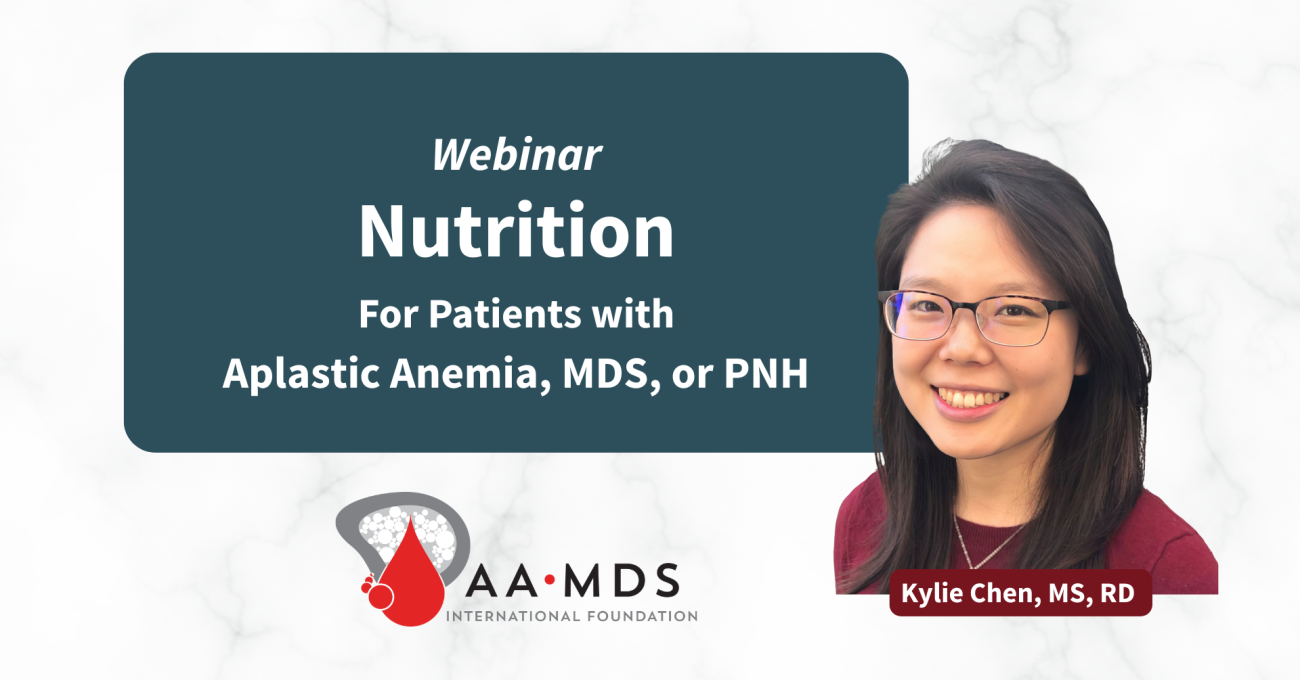
Nutrition for Patients with Aplastic Anemia, MDS, or PNH

Thumbnail for video Watch Now

Topic(s)
Paroxysmal Nocturnal Hemoglobinuria (PNH)
Aplastic Anemia
Living Well with Bone Marrow Failure
Myelodysplastic Syndromes (MDS)
In this webinar, Kylie Chen, Registered Dietitian, discusses common nutrition challenges and evidence-based strategies to improve nutritional status and learn easy nutrition swaps.

Website Feedback

Please use this feedback form to report website issues only. For other issues concerning patients and families, please email help@aamds.org or use the Patient and Family Helpline here.