
Brandi was hooked on acting from the time she was three and played a munchkin in the Wizard of Oz. She eventually sidelined her first love to study political science at the University of Northern Alabama.
In 2011, she made history there as the first black Miss UNA. Her next coveted role was as a college intern on Capitol Hill in Washington, D.C. But by far, the hardest part she ever had to undertake was that of a
bone marrow failure
bone marrow failure:
A condition that occurs when the bone marrow stops making enough healthy blood cells. The most common of these rare diseases are aplastic anemia, myelodysplastic syndromes (MDS) and paroxysmal nocturnal hemoglobinuria (PNH). Bone marrow failure can be acquired (begin any time in life) or can be…
patient.
“I have PNH. I was previously diagnosed with
aplastic anemia
aplastic anemia:
(ay-PLASS-tik uh-NEE_mee-uh) A rare and serious condition in which the bone marrow fails to make enough blood cells - red blood cells, white blood cells, and platelets. The term aplastic is a Greek word meaning not to form. Anemia is a condition that happens when red blood cell count is low. Most…
in 2008, but I became well and it went into remission. In 2014, I had graduated from college and had just started working when the aplastic anemia came back and with it came the PNH.”
Her family didn’t know where to start, or who to go to. Brandi began seeing a local doctor and one at Emory University Hospital in Atlanta, but she says both were “kind of confused” because they’d never met anyone with PNH. “It was scary having two blood disorders, so all of us together had to try to figure out how to make this better for me.”
Brandi’s close-knit family was devastated and struggled right along with her, staying up nights to research online, looking for answers and specialists they could consult with.
They worried that treatment would interfere with Brandi’s quality of life, especially after learning that her two sisters were not 100% DNA matches. Not knowing what would happen next, they also worried about the financial strain. But then they found
hematologist
hematologist:
(hee-muh-TOL-uh-jist) A doctor who specializes in treating blood diseases and disorders of blood producing organs.
Dr. David Araten of NYU Langone Health, and their prayers were answered.
Brandi’s local doctor connected them with Dr. Araten, who her Dad now calls “the #1 guy in our lives.” Her mom said, “One of the things he said on her first visit was that he would change her life without having to go through a
bone marrow transplant
bone marrow transplant:
A bone marrow transplant (BMT) is also called a stem cell transplant (SCT) or hematopoietic stem cell transplant (HSCT).The procedure replaces unhealthy blood-forming stem cells with healthy ones and offers some patients the possibility of a cure. But for many patients, a BMT is not an option due…
.”
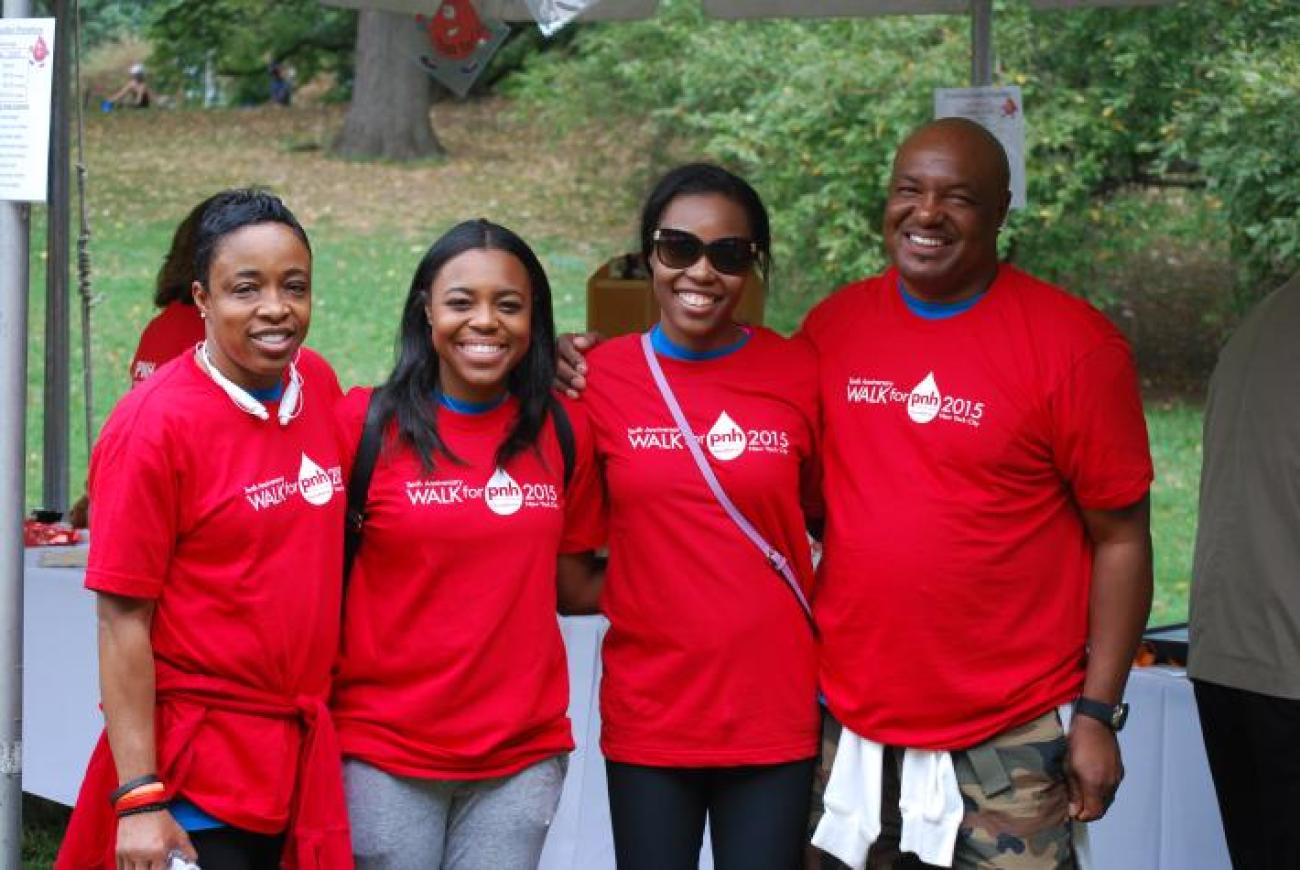
An AAMDSIF travel assistance grant made it possible for the Lewis family to go to New York for what turned out to be a pivotal doctor’s appointment. The family also attended our annual PNH/March for Marrow walk in New York, where Dr. Araten gives a presentation at the pre-event breakfast we host. That’s where Brandi was able to engage with her peers and learn valuable information from other PNH patients who were also experiencing fertility issues like she was.
“Not only have we been the support system to her, we’ve had an incredible support system,” her parents said. They have a profound sense of gratitude for the outpouring of love they’ve had from their family, friends and workplaces.
“They even had prayer sessions in our front yard when Brandi couldn’t touch anybody or talk to anybody. But she stood in the doorway and waved.” Their experience with Brandi’s rare diseases has taught them the importance of remaining calm and focused on the research, which they say is key. As her mom put it: “Don’t give up and remember to laugh and enjoy life. There were many times that we’d be crying in the hospital room, and yet we’d still find something to laugh about.”
Updates
Brandi continues to thrive!
As Brandi told her story in the video, she had a lengthy treatment cycle for PNH. The first routine was ATG, followed by many months of medications---at one time, she was on eight different drugs per day. But the past two years she hasn’t had to take any of these medications, not even
cyclosporine
cyclosporine:
Cyclosporine is used along with antithymocyte globulin (ATG), another immunosuppressant, for treating aplastic anemia and some other forms of bone marrow failure.
.
Due to the onset of PNH and the treatment regimen, she had to delay an entire year of college. She studied political science because she enjoyed learning about legal issues. Remarkably, her current work allows her to work on legal issues all day, in human resources for a payroll services company.
Brandi’s parents, also featured in the video, are doing well. They can finally relax as they witness her good health and happy outlook.
We all look forward to Brandi’s next steps on her journey. Congratulations, Brandi!