Aplastic Anemia
Aplastic Anemia - Thursday Evening - Virtual Support Group - 2026 October
AAMDSIF is pleased to announce that we will host a support group for patients diagnosed with aplastic anemia aplastic anemia: (ay-PLASS-tik uh-NEE_mee-uh) A rare and serious co
Aplastic Anemia, MDS, PNH Virtual Support Group-Saturdays-2026 October
AAMDSIF is pleased to announce that we will host a support group for patients diagnosed with aplastic anemia aplastic anemia: (ay-PLASS-tik uh-NEE_mee-uh) A rare and serious co
Inhibiting ferroptosis enhances ex vivo expansion of human haematopoietic stem cells
Original Publication Date
Article Source
External Web Content
Abstract Improved ex vivo expansion of human haematopoietic stem cells (HSCs) would considerably advance transplantation and genome-engineered therapies, yet existing culture methods still allow substantial HSC loss. Here we show that this attrition is driven largely by…
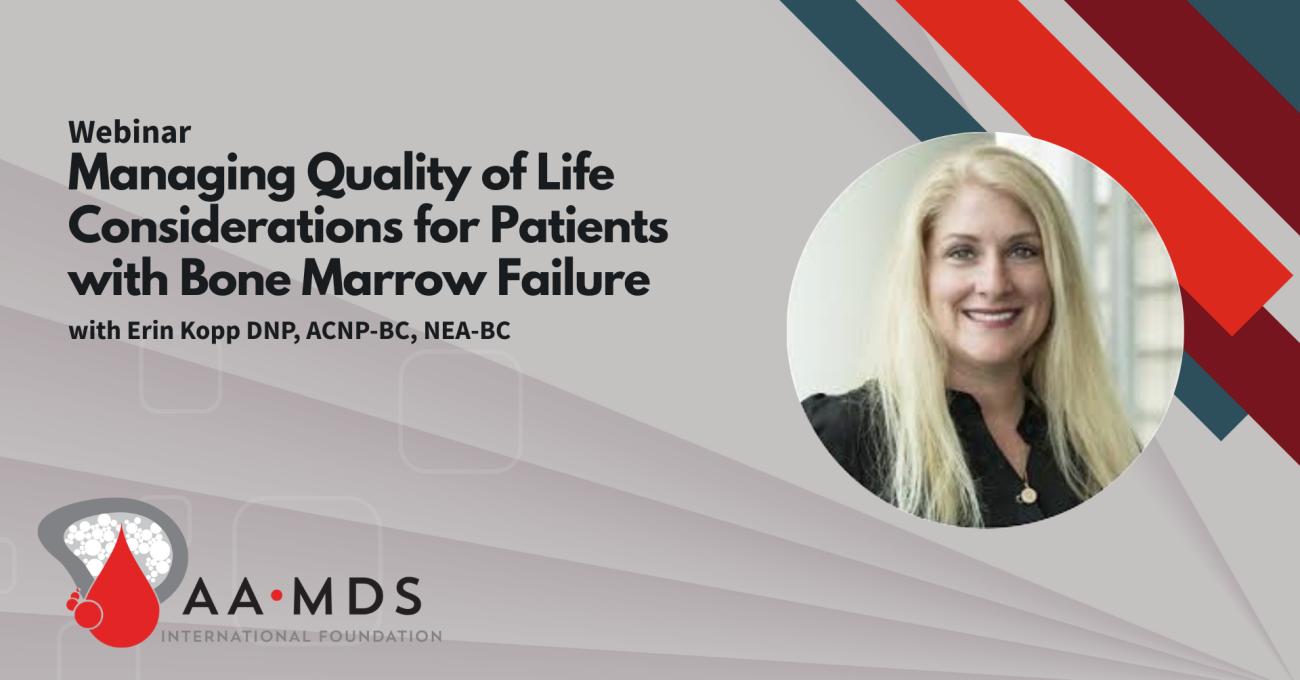
Managing Quality of Life Considerations for Patients with Bone Marrow Failure
Topic(s)
Aplastic Anemia
Bone Marrow Transplant
Myelodysplastic Syndromes (MDS)
Paroxysmal Nocturnal Hemoglobinuria (PNH)
Pediatric Bone Marrow Failure Diseases
Presenter(s)
Erin Kopp, DNP
This 30-minute webinar reviews the range of opportunities for health care providers to incorporate quality of life considerations with bone marrow failure patients and their caregivers. Assessing resources needed for patients and communicating with the entire health care team…
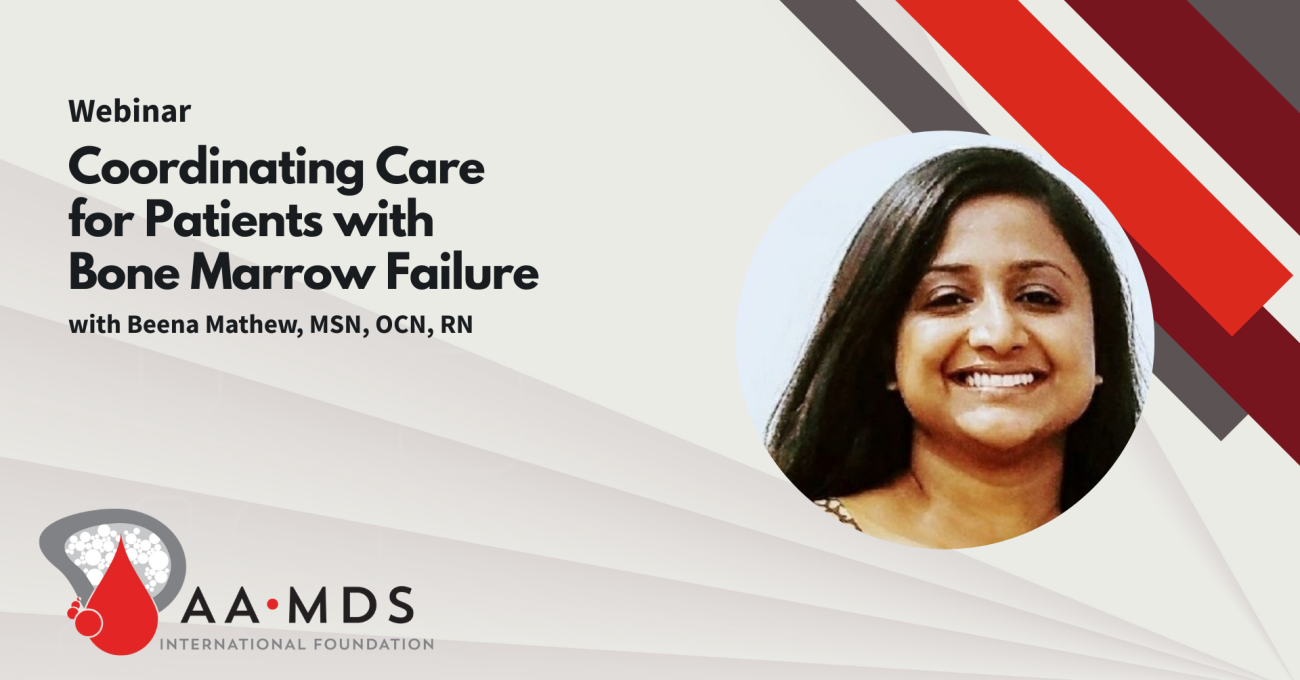
Coordinating Care for Patients With Bone Marrow Failure
Topic(s)
Aplastic Anemia
Bone Marrow Transplant
Living Well with Bone Marrow Failure
Myelodysplastic Syndromes (MDS)
Paroxysmal Nocturnal Hemoglobinuria (PNH)
Pediatric Bone Marrow Failure Diseases
Presenter(s)
Beena Mathew, MSN, OCN, RN
This informative 30-minute webinar provides practical recommendations for how health care providers can coordinate care for their bone marrow failure patients. Communication among members of the entire health care team managing these patients will also be discussed. This webinar…
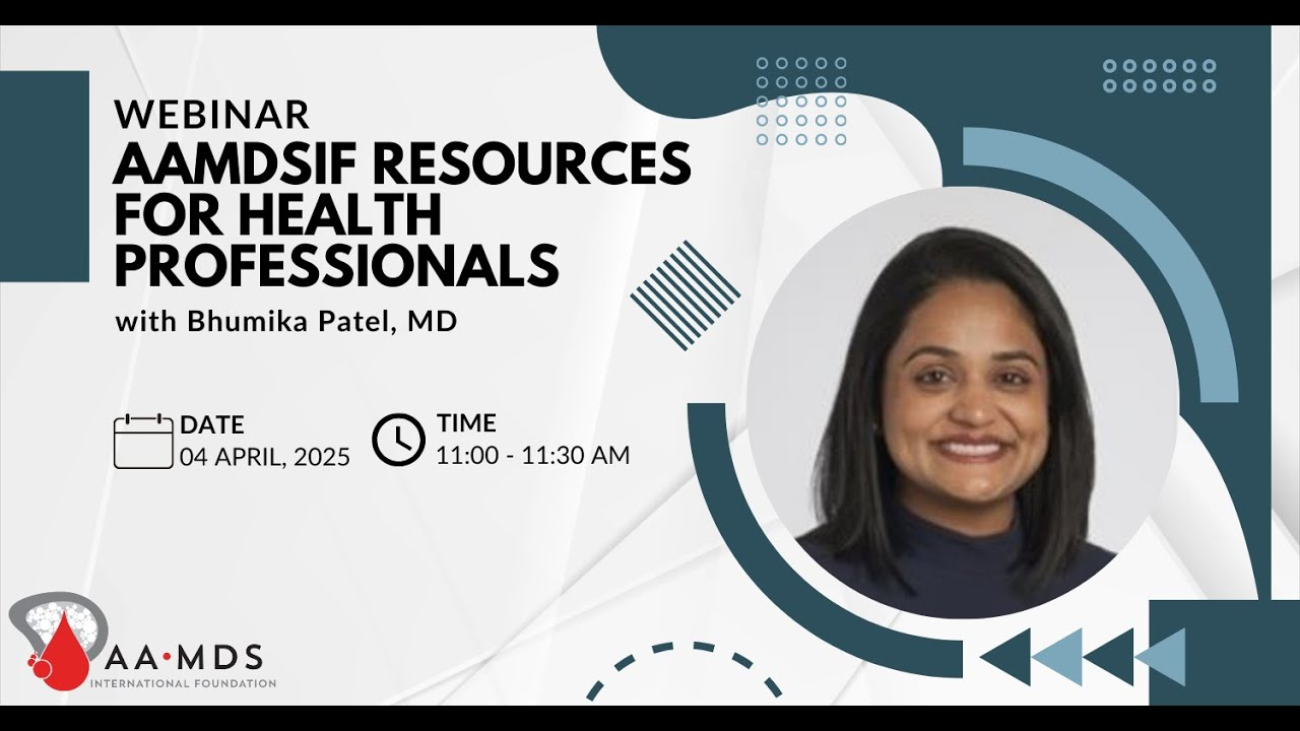
AAMDSIF Resources for Health Professionals
Topic(s)
Aplastic Anemia
Bone Marrow Transplant
Living Well with Bone Marrow Failure
Myelodysplastic Syndromes (MDS)
Paroxysmal Nocturnal Hemoglobinuria (PNH)
Pediatric Bone Marrow Failure Diseases
Presenter(s)
Bhumika Patel, MD
Dr. Patel discusses how health care providers, especially those in community settings, can connect patients with aplastic anemia, MDS, or PNH with AAMDSIF patient education resources and support. View, download, or order AAMDSIF patient guides and fact sheets here: https://www…