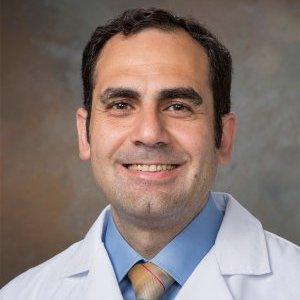
Amer Zeidan’s primary research interest is in
myelodysplastic syndromes
myelodysplastic syndromes:
(my-eh-lo-diss-PLASS-tik SIN-dromez) A group of disorders where the bone marrow does not work well, and the bone marrow cells fail to make enough healthy blood cells. Myelo refers to the bone marrow. Dysplastic means abnormal growth or development. People with MDS have low blood cell count for at…
(MDS) and was mentored in this research area by Dr. Steven Gore and Dr. B Douglas Smith at Johns Hopkins University where he has completed a clinical hematology/oncology fellowship and a
clinical research
clinical research:
A type of research that involves individual persons or a group of people. There are three types of clinical research. Patient-oriented research includes clinical trials which test how a drug, medical device, or treatment approach works in people. Epidemiology or behavioral studies look at the…
fellowship in myelodysplastic syndromes. He also earned a Master of Health Science (MHS) degree in Clinical Investigation at Johns Hopkins before recently moving to Yale University as an Assistant Professor of Medicine to reunite with Dr. Steven Gore and continue his MDS research.
Dr. Zeidan has two major areas of research interest. The first area is the development of novel therapies for MDS and
refractory
refractory:
Not responsive to treatment or cure. For example, refractory anemia is a low red blood cell count that doesn't respond to standard treatments.
myeloid malignancies with a focus on immune therapy including approaches that harness the patient’s own immune system to attack the cancer cells. Dr. Zeidan and his colleagues designed and initiated an ongoing trial that uses an antibody to stimulate the immune system in patients with MDS who did not respond to the existing drugs (such as
azacitidine
azacitidine:
It works by reducing the amount of methylation in the body. Methylation is a process that acts like a switch to turn off or “silence” genes in certain cells. When these genes (called tumor suppressor genes) are turned off, MDS cells and cancer cells can grow freely. Azacitidine is approved by the U…
and
decitabine
decitabine:
It works by reducing the amount of methylation in the body. Methylation is a process that acts like a switch to turn off or “silence” genes in certain cells. When these genes (called tumor suppressor genes) are turned off, MDS cells and cancer cells can grow freely. Decitabine is approved by the U…
) and are not candidates for stem cell transplantation. Studies have found that cancer cells can block the effects of effective cancer-fighting immune cells known as the T-cells. One way the cancer cells evade the immune system is by activating a protein called the Cytotoxic T-Cell
Lymphocyte
Lymphocyte:
A type of white blood cell. B lymphoctyes, or B cells, help make special proteins called antibodies that fight bacteria and viruses (immune response). T lymphocytes, or T cells, help kill tumor cells and help the body's immune response.
Antigen-4 (CTLA-4) which is present on the surface of T-cells and its activation inhibits them therefore allowing cancer cells to escape killing by T-cells. Antibodies against CTLA-4 can block its function therefore activating these T-cells to fight cancer cells. One anti-CTLA-4 antibody, ipilimumab (YERVOY®), has been shown to do so and was the first drug to prolong survival of patients with metastatic melanoma and as such has been approved for treatment of this disease. Dr. Zeidan and colleagues are evaluating the safety and applicability of using an ipilimumab-based strategy in patients with MDS. A vital component of this study will be laboratory studies to evaluate effects of Ipilimumab on the immune system cells to understand how the antibody works and to possibly allow prediction of which patients respond, if any, and which ones develop toxic effects. This
clinical trial
clinical trial:
A type of research study that tests how a drug, medical device, or treatment approach works in people. There are several types of clinical trials. Treatment trials test new treatment options. Diagnostic trials test new ways to diagnose a disease. Screening trials test the best way to detect a…
may lead to further exploration of Ipilimumab in combination with other therapies to help improve outcomes. The study is currently open at Johns Hopkins and there are ongoing efforts to open it at other centers including Yale University.
The second area of research interest for Dr. Zeidan is effectiveness and outcomes research in hematologic malignancies especially MDS; a type of research that evaluates how much benefit do patients achieve from existing MDS treatments at the community level and how well do these therapies work in the real world outside of the controlled
clinical trials
clinical trials:
Clinical research is at the heart of all medical advances, identifying new ways to prevent, detect or treat disease. If you have a bone marrow failure disease, you may want to consider taking part in a clinical trial, also called a research study.
Understanding Clinical Trials
Clinical…
setting. Using the a large Medicare claims-based database with upwards of 23,000 records, Dr. Zeidan and his colleagues confirmed the clinical benefits of
lenalidomide
lenalidomide:
Lenalidomide is a capsule that is taken by mouth. It is approved for treating low-risk, transfusion-dependent myelodysplastic syndrome (MDS) patients with an abnormality of chromosome 5q. It is currently in clinical trials to test its efficacy with a broader range of MDS patients. For some MDS…
and
iron chelation therapy
iron chelation therapy:
(kee-LAY-shun) A drug therapy to remove extra iron from the body. Patients with high blood iron (ferritin) levels may receive iron chelation therapy. The U.S. Food and Drug Administratin (FDA) has approved two iron chelators to treat iron overload in the U.S. - deferasirox, an oral iron chelator,…
in patients with MDS at the population level. Dr. Zeidan will continue to work on conducting this type of research in an MDS-focused research group within the Yale School of Public Health Cancer Outcomes, Public Policy, and Effectiveness Research (COPPER) Center at Yale University. In addition, Dr. Zeidan used clinical databases to compare the utility of different prognostic models to predict how patients with MDS fare with existing treatments.
As with other Evans Fellows, Dr. Zeidan shared that his receipt of the fellowship allowed him to advance his career. Along with an American Society of Clinical Oncology Young Investigator Award, the Evans fellowship allowed him to extend his work into a fourth year and expand recruitment of patients into his clinical trial and conduct database research. The funds provided through the Evans Fellowship in association with the MDS Clinical Research Consortium allowed enough ‘protected’ research and academic time for Dr. Zeidan to pursue additional training in biostatistics through the Bloomberg School of Public Health at Johns Hopkins. This type of research-based training is invaluable in creating exceptional clinical researchers with the ability to advance research findings into clinical practice.
Yale University and Yale Cancer Center
35 Park Street
New Haven, CT 06510
United States