
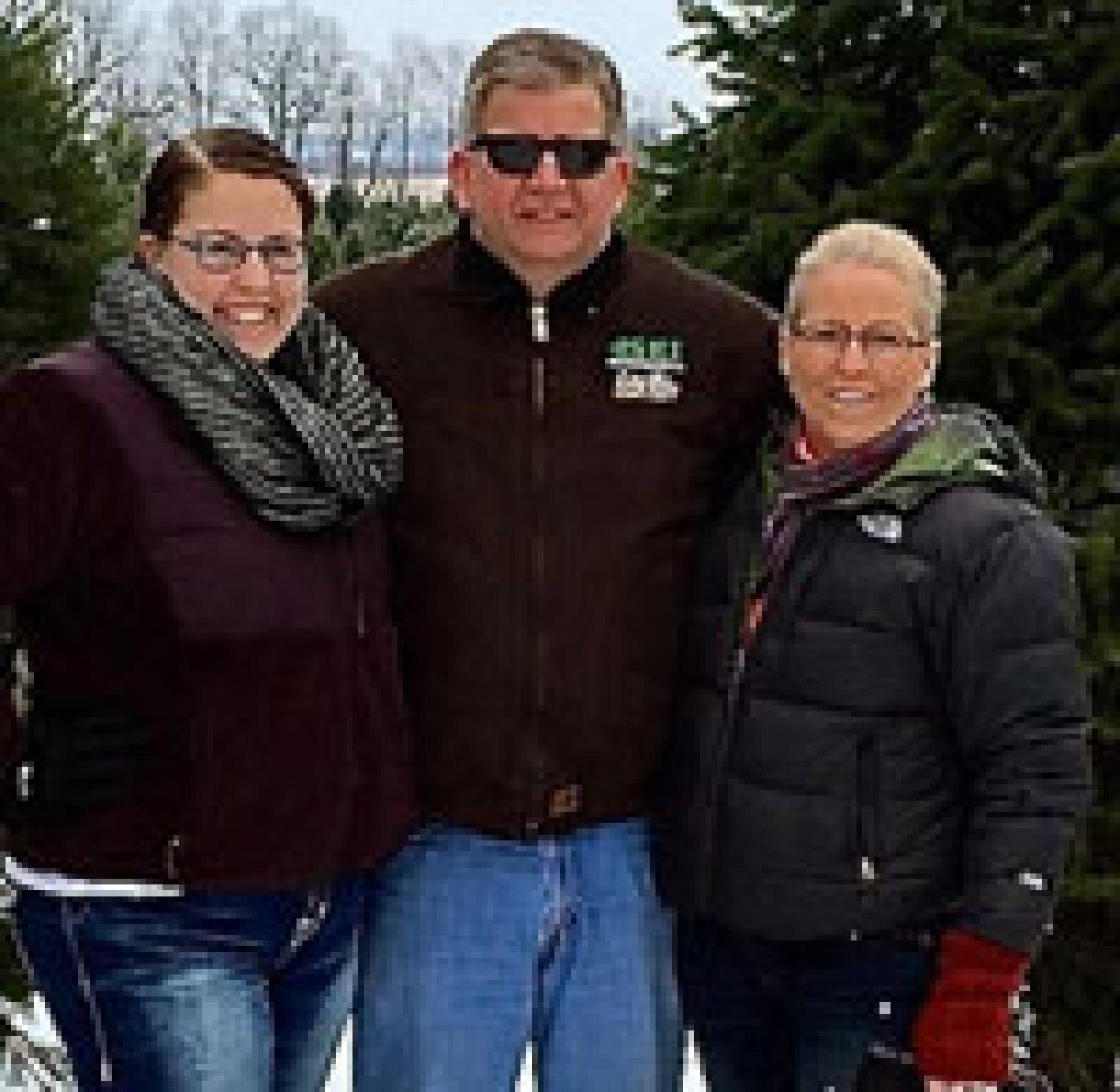
I believe that a story is the shortest distance between two people. While this is my story, it is not just mine, and I did not do any of this alone. In April 1983, my husband Joe and I were 25 years old and attending to the required pre-marital blood work. Next thing we knew, we were sitting in a doctor’s office because my blood counts were abnormally low. They told us there was something wrong, but they didn’t know what it was. Referring us to a
hematologist
hematologist:
(hee-muh-TOL-uh-jist) A doctor who specializes in treating blood diseases and disorders of blood producing organs.
/oncologist, we were told I would be dead in six months and that we might want to rethink our marriage. A month later, as I was walking down the aisle towards the man I had planned on spending my life with, “till death do us part” took on a new meaning. We left for our honeymoon with the diagnosis of “hypoplastic
anemia
anemia:
(uh-NEE-mee-uh) A condition in which there is a shortage of red blood cells in the bloodstream. This causes a low red blood cell count. Symptoms of anemia are fatigue and tiredness.
“and returned home to an updated diagnosis of leukemia.
My treatment then began my love/hate relationship with
prednisone
prednisone:
Prednisone a man-made version of a hormone produced naturally by the adrenal gland that can help reduce inflammation and stop allergic responses. It is prescribed when the body is not producing enough of this chemical on its own.
How does it work?
For PNH, it may be used to decrease…
. We sought opinions from additional specialists, without ever receiving a conclusive diagnosis or promising treatments. In September 1983, my sister urged us to go to a research hospital. Off we went to the Hospital of the University of Pennsylvania, an hour from our home which was then in Bethlehem. The doctors continued to treat the symptoms with prednisone and made an unusual decision. Even with counts below a functional level, they were not going to order
blood transfusions
blood transfusions:
A blood transfusion is a safe and common procedure. Most people who have a bone marrow failure disease like aplastic anemia, MDS or PNH will receive at least one blood transfusion. When you receive a blood transfusion, parts of blood from a donor are put into your bloodstream. This can help some…
because of the risk of infection from HIV and possible compromise of a future
bone marrow transplant
bone marrow transplant:
A bone marrow transplant (BMT) is also called a stem cell transplant (SCT) or hematopoietic stem cell transplant (HSCT).The procedure replaces unhealthy blood-forming stem cells with healthy ones and offers some patients the possibility of a cure. But for many patients, a BMT is not an option due…
. This decision was a reflection of the times, but it would play an important part in my future! I spent the next three years feeling mostly exhausted as I continued on the prednisone and a few other drugs.
My counts and overall health took a nosedive in 1986 and it was recommended that I enter a bone marrow transplant program. We talked to and visited centers around the country, but ultimately we weren’t keen on having a transplant without a solid diagnosis. Conceptually, I knew that my life had a limit now, but with the nudging of my sister and believing we hadn't obtained the answers that we needed, I turned to Good Housekeeping magazine. Didn't every woman in the pre-Internet 1980s?
In September 1986, their yearly insert of the best physicians in specific disciplines gave us the names of the top hematologists/oncologists at the top hospitals in the country. And with no email, we sent handwritten letters to all 24 of them telling them about my case and asking them for help. All 24 wrote back, directing us to Duke University Medical Center, which was performing
clinical trials
clinical trials:
Clinical research is at the heart of all medical advances, identifying new ways to prevent, detect or treat disease. If you have a bone marrow failure disease, you may want to consider taking part in a clinical trial, also called a research study.
Understanding Clinical Trials
Clinical…
with horse
bone marrow
bone marrow:
The soft, spongy tissue inside most bones. Blood cells are formed in the bone marrow.
(which led to the subsequent approval of horse ATG). Imagine my husband and me looking at a piece of paper that told us that my only hope might come from a horse! Talk about a leap of faith! My parents paid for our flights and off we went to meet the first of many important people in this journey, Dr. Wendell Rosse. His words at that first encounter have stayed with me for over 30 years. "You have one thing to do. And that is hope. Because hope only goes one way and that way is forward."
Three years, nine doctors, and three hospitals later, it was Dr. Rosse who finally diagnosed me with
aplastic anemia
aplastic anemia:
(ay-PLASS-tik uh-NEE_mee-uh) A rare and serious condition in which the bone marrow fails to make enough blood cells - red blood cells, white blood cells, and platelets. The term aplastic is a Greek word meaning not to form. Anemia is a condition that happens when red blood cell count is low. Most…
and two months later, with
paroxysmal nocturnal hemoglobinuria
paroxysmal nocturnal hemoglobinuria:
(par-uk-SIZ-muhl nok-TURN-uhl hee-muh-gloe-buh-NYOOR-ee-uh) A rare and serious blood disease that causes red blood cells to break apart. Paroxysmal means sudden and irregular. Nocturnal means at night. Hemoglobinuria means hemoglobin in the urine. Hemoglobin is the red part of red blood cells. A…
(PNH). In March 1987, after securing the hefty amount of funds required for the down payment, I began a grueling month-long ATG treatment. During that time, I was attached to an IV pole that I named Rob Lowe (hey, it was the 80s)!
Serum sickness
Serum sickness:
An immune system reaction to foreign proteins in certain medicines. Serum sickness can be a side effect of ATG, causing fever, rash, joint pain, and muscle aches.
and paralysis left us with little hope. We returned home to wait out the results and prepared for my possible death. It would be a full year, but my body began to respond.
Back in 1983, a group of people were affected by a rare and generally unknown group of
bone marrow failure
bone marrow failure:
A condition that occurs when the bone marrow stops making enough healthy blood cells. The most common of these rare diseases are aplastic anemia, myelodysplastic syndromes (MDS) and paroxysmal nocturnal hemoglobinuria (PNH). Bone marrow failure can be acquired (begin any time in life) or can be…
diseases. With little information and resources available, they began a journey whose sole purpose was to offer answers, support, and hope to others affected by the same diseases. What would become the Aplastic Anemia and MDS International Foundation (AAMDSIF) was born. In 1986, Dr. Rosse introduced us to the Foundation. It was like coming home, because we now had a trusted source for information and we had support. I still have most of the newsletters from that time. I volunteered as a patient support contact with AAMDSIF (now the Support Connection program). People all over the world contacted me when diagnosed, in treatment or just to talk.
While everyone around me assumed I had beaten the diseases, all the doctors would ever say to me was that I could be considered in remission. These three diseases don’t come with the word “cure” as a prognosis, at least they didn’t for me. When they told me in 1988 to go enjoy my life, they couldn’t tell me if that meant two years (remember, ATG was experimental) or 50 years. So I adopted Dr. Rosse’s word “hope”, and we went forward.
While the next 30 years were not uneventful, we did come to a comfortable place, believing that the horses from Kalamazoo, Michigan (yep, that was their home!) had done their job. Elbow surgery and knee replacements from avascular necrosis as well as back surgery were among the hurdles to overcome.
How do we regain trust in our bodies? I don't think we do. I think our new normal is one of caution, while trying to keep the fear at bay. I had to find a place of peace. I found mine in understanding and acceptance that every living being has two things in common. We are all born and we will all die. I cannot change this. I can change what comes in between the two.
Joe and I moved on with our marriage, our lives and our careers. Children had been ruled out before we even said “I do”. After a failed adoption, we had given up hope that children would be part of our future. Taking pen to paper again, I inquired among the top gynecologists in the country about aplastic anemia/PNH and giving birth. In 1991, with the support of my gynecologist we were blessed with our greatest accomplishment, our daughter Kate.
Having survived aplastic anemia and PNH, I got a bit cocky. We had been through the abyss. I figured that since we spent our 20s and 30s in that abyss, we had paid our dues and learned our lessons. Trust was one of them. I thought trust meant that it wouldn’t happen again – but I had misunderstood the lesson. The lesson was that I would trust that my faith would lead me through.
In April 2013, on the return from a business trip for my new job, I noticed a small bruise the size of a mole on my arm. I don’t know why, but since I hadn’t had a blood test in a few years, I went for one. The call came on a beautiful sunny spring afternoon. I was told, "There is a problem. We don't know yet, but it may be back." Sitting in the doctor’s office with Joe, 30 years later almost to the day, I looked down at our intertwined hands. The only difference was the age spots on them now. Two hospitals and three doctors later, we were told I had developed
myelodysplastic syndromes
myelodysplastic syndromes:
(my-eh-lo-diss-PLASS-tik SIN-dromez) A group of disorders where the bone marrow does not work well, and the bone marrow cells fail to make enough healthy blood cells. Myelo refers to the bone marrow. Dysplastic means abnormal growth or development. People with MDS have low blood cell count for at…
(MDS). The prognosis was that I had 18 months to live. Reeling and mentally scattered from the news, my husband sat me down and asked me this simple question. “How do you eat an elephant? You eat an elephant one bite at a time.”
I have lived that for every moment of every day for the past two years. It has kept me moving forward instead of paralyzed with fear. What do I have to do today? We needed a plan. After 30 years, I put in a call to Andrea, a woman I had met through AAMDSIF. She is still living with aplastic anemia and told me about her doctor at Memorial Sloan Kettering in NYC. Off we went and for the second time in my life, I found the trust and hope in my physician. We formulated our plan which was
azacitidine
azacitidine:
It works by reducing the amount of methylation in the body. Methylation is a process that acts like a switch to turn off or “silence” genes in certain cells. When these genes (called tumor suppressor genes) are turned off, MDS cells and cancer cells can grow freely. Azacitidine is approved by the U…
(Vidaza®) treatment followed by a stem cell transplant. I received the gift of life from my brother Neal on January 25, 2014.
As I recall the date of the transplant, it occurs to me that somehow I’m discounting or diminishing the year before and after. No one will ever know what this journey has been like for us or people living with aplastic anemia, PNH and MDS. I would not have met the challenges of this journey without my faith, my medical teams and my family, which includes my “secret weapon” Joe, my inspiring daughter Kate, and my sister Beth who guided Joe and I through this journey with love and skill that I cannot begin to summarize. They have tirelessly and selflessly taken care of and loved me through this. I thank my brother, for his support and gift of life, which makes it possible for me to celebrate my 57th birthday on May 1!
I thank our village - my mom, my other brother, sister-in-law, brother-in-laws, nieces, nephews, cousins - all who supported and made it possible for my caregivers and donor to concentrate on me. There were friends who shared their homes with Joe and Kate during my hospital stays, and those who would drop everything to come and comfort me when panic set in, listening to impossible rambling and fear, answering the last minute calls to become my caregiver during Joe's recovery from flu and colds. There were friends who took care of our home from shoveling snow to spring garden clean ups, funny messages, texts, emails, pictures of gatherings and celebrations that took me on wonderful trips into their daily lives, moving me from the hospital to Hope Lodge and visits which fueled my desire to get better. We felt hugged every single day. Words do little to convey what the efforts of our village have done for us and the profound difference it has made on our journey with all three of the diseases.
I’m often asked if I’m angry that I got MDS 30 years after my aplastic anemia and PNH treatment. What would I be angry about? I’ve had more than 30 years with an incredible man, and watched my daughter grow up and get ready to embark on her own journey after her college graduation this month. I’ve had a fulfilling 30-plus year career in knowledge management (sharing information and knowledge assets) with good companies, traveled the country and the world, and explored my creative self. I’ve also had the privilege of being with my 88-year-old inspiration, my mom.
Here are three of the many lessons I’ve learned from our journey.
Faith - Faith gives me strength and steers me away from fear. Bob Marley said, “I did not realize how strong I was until it was the only choice I had.”
Hope - More than thirty years later, I lay in yet another hospital bed, the room lit only by the lights of the pumps connecting me to dozens of bags. I looked up at my “Rosie the Pivoter”, as we called my pole this time. It was my protection, nutrition and medication during my pre-bone marrow transplant
chemotherapy
chemotherapy:
(kee-moe-THER-uh-pee) The use of medicines that kill cells (cytotoxic agents). People with high-risk or intermediate-2 risk myelodysplastic syndrome (MDS) may be given chemotherapy to kill bone marrow cells that have an abnormal size, shape, or look. Chemotherapy hurts healthy cells along with…
regimen. There, hanging on the pole, was the bag marked “ATG.” My world stopped. This was one of those life-changing moments – thirty years of trials, research, doctors, nurses, testing, failures, which I and those who have gone before their time were part of in some way. I looked up at my pole and I was alive. That ATG
clinical trial
clinical trial:
A type of research study that tests how a drug, medical device, or treatment approach works in people. There are several types of clinical trials. Treatment trials test new treatment options. Diagnostic trials test new ways to diagnose a disease. Screening trials test the best way to detect a…
was now standard practice for saving lives.
Perspective - At the end of each day, it is about perspective. While much has been taken from us, what has been given to us is tenfold.